The combination of rich chocolate and crispy biscuits creates a...
Read More


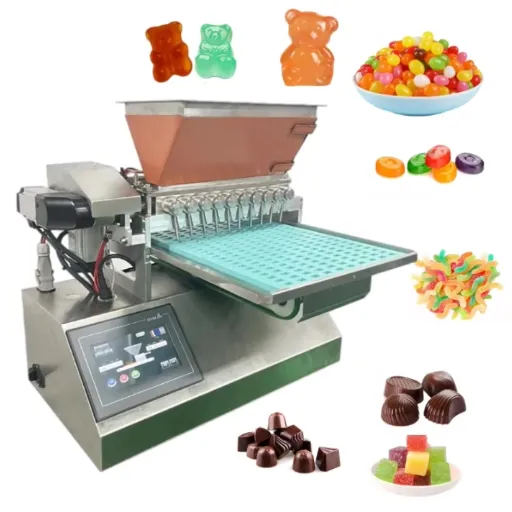
Gummy pouring machinery is at the heart of chocolate and candy making. It is, therefore, an investment that requires time and money for maintenance every day to keep it working at top performance standards. Failure to maintain this machinery will cause down time, lower product quality, and inefficient operations that add to costs. This book will show you how to maintain and optimize your gummy pouring machinery to ensure that your production runs smoothly and according to specification. The contents discussed will range from preventive maintenance schedules to solving bottlenecks concerning production metrics. Whether you are an experienced production manager or beginning your career in candy manufacturing, the article will offer practical solutions for protecting your investment and consistently meeting production criteria.
Introduction to Gummy Making Machines

Overview of Gummy Pouring Machines
Gummy pouring machines are required in the confectionery arena, ensuring gummy production with precision and uniformity. Different gummy recipes and formulations are dealt with by these machines, which pour the mixture with great accuracy into molds while adhering strictly to quality standards. Programmable control systems can be configured as per the production needs to adjust parameters of temperature, speed of pouring, volume, and so forth. More cleverly designed versions offer higher servo-drive from the mechanism side to provide better control and to minimize waste, especially in larger capacity operations.
Modern Gummy Pouring Machines have several nozzles for filling more cavities at a time so the production time increases. This way, the molds and demolding will be kept with cooling so as to not interrupt the workflow, thus minimizing any downtime. Most of the machinery is constructed of food-grade stainless steel to comply with hygiene and safety standards, and the designs allow for the best ergonomics in cleaning and maintenance.
Gummy pouring machines enable precise engineering and automation, resulting in near-consistent output that varies very little, making them ideal for scaling production. They are involved in the production that gives gummies a uniform texture, flavor, and look, hence laying down the very foundations for large-scale quality confectionery manufacturing.
Importance of Gummy Manufacturing Equipment
Gummy-making ware should serve as the cornerstone for an efficient and streamlined working process in the confectionery and food industries. Modern machines enable scalable operations by performing tasks such as mixing, molding, and depositing with high precision and reliability. This precision is what maintains consistency in the products, and consumer confidence in the brand typically depends on it.
Key Benefits:
- Precision Control: Depositing systems offer advanced dosing capabilities, ensuring that each gummy has the same weight and shape
- Cost Efficiency: Minimum wastage of material reduces production costs and indicates sustainable production
- Temperature Regulation: State-of-the-art heating and cooling equipment maintain proper gelation and achieve optimum texture
- Extended Shelf Life: Precise temperature control conserves shelf life of final products
Automation and digital integration capabilities further extend the functionality of gummy-making equipment. Through the implementation of PLCs (Programmable Logic Controllers) and touch-screen interfaces for real-time monitoring and adjustments in production cycles, workers can essentially focus on other tasks while production is optimized. Through the monitoring systems, producers obtain essential information on the efficiency of the production process, enabling them to identify areas needing improvement for maximizing operational performance.
Transportation investments in gummy manufacturing machinery shall mean paying heed to the highest scale demand for gummy applications. Either the art of scaling up production to keep pace with demand while maintaining gummy quality is in itself an essential part of manufacturing standard fruit-based gummies or functional gummies that provide for vitamin, supplement, or CBD needs. Upon consideration of the high-grade criteria of machinery that are of construction built to ensure durability, hygiene, and compliance, the manufacturers would then have been positioned nicely to meet market demand while still conforming to stringent industry standards.
Types of Gummy Machines Available
Custom gummy-making machines are a specialized type of machine designed to meet the unique needs of the confectionery and nutraceutical gummy industries. Below are the primary types of gummy machines available:
Batch Mixers
Batch mixers are used for mixing ingredients such as gelatin, pectin, or alternative gelling agents with flavors, colors, and additives. These mixers are designed to work with precision and consistency, while the most modern batch mixers are automated to ensure uniformity during production.
Gummy Depositors
With these depositors, gummy mixtures are accurately injected into pre-designed molds. They can handle all types of mold configurations and sizes, allowing for efficient scaling during production with no compromises on product uniformity. Sophisticated depositors also provide multi-color and layering functions.
Cooling Tunnels
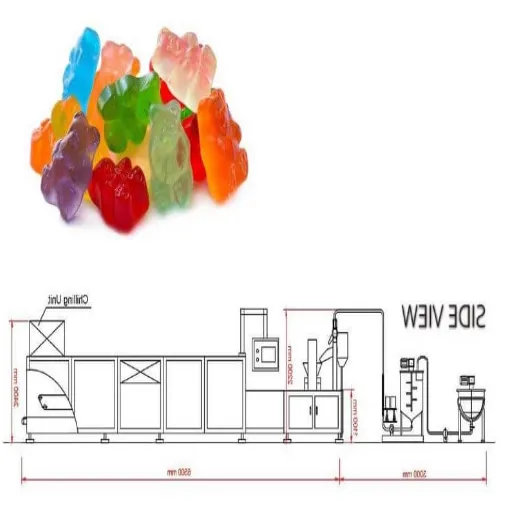
Gummy cooling tunnels provide the solidification that allows gummies to retain their shape while moving through a temperature-controlled environment. These tunnels are designed for continuous production and may be tailored to meet throughput requirements.
Coating Machines
Certain types of gummies, particularly nutraceutical gummies, are coated with materials such as sugar, citric acid, or functional ingredients. Coating machines afford even application, which improves appearance and shelf stability.
Inspection and Packaging Systems
These inspection systems, coupled with optical sensors or X-ray technology, eliminate defective products to maintain quality. These are then sent to packaging systems, which handle the gummies with precision, thereby preventing deformation but maximizing throughput.
Each machine type plays a vital role in the gummy production chain. By leveraging innovations such as programmable controls, sanitary design, and energy efficiency, manufacturers can optimize their operations to meet large-volume demand without compromising consistency or compliance.
Understanding the Gummy Production Process
Ingredients Necessary for Making Gummy Candy
The production of gummy candies involves a carefully balanced combination of principal ingredients that work together to achieve the desired texture, flavor, and shelf stability. These components contain gelatin, sweeteners, flavorings, colorants, acids, and other functional ingredients that serve specific functions in the formulation mix.
With rigorous control over the proportions and quality of these components, one can manufacture gummies that cater to different consumer demands while remaining cost-efficient. Developments in ingredient engineering and formulation technology enable greater customization, such as low-sugar options or fortification, without compromising the sensory experience.
Role of Depositors in Gummy Making
From a production point of view, the depositor is a must-have machine for gummy manufacture, as it guarantees reproducibility, efficiency, and homogeneity. Those special machines could weigh and dose gummy base mixtures into molds and assure conformity in size, weight, and shape even in large production. Depositers have truly reached a pinnacle with advances in technology. For example, many manufacturers adopt servo-controlled systems that permit microadjustments to the dosing parameters, minimizing waste while keeping the product within standards.
Advanced Depositor Capabilities:
- Handle complex formulations with active ingredients
- Ensure even distribution throughout batches
- Process various viscosities and densities
- Maintain homogeneous product consistency
- Operate at extremely high speeds
- Produce thousands of gummies per hour
- Adhere to hygiene and food safety standards
- Multi-color and center-filling capabilities
Depositors can easily handle complex formulations with active ingredients of their own, such as vitamins or plant alternatives, ensuring an even distribution throughout the batch. For instance, high-performance depositors can handle viscosities and densities with complex flow behaviours critical to have a homogeneous product. Such systems can operate at extremely high speeds, producing thousands of gummies per hour while strictly adhering to hygienic and food safety standards.
The multi-color and center-filling capabilities in modern depositing lines are allowing manufacturers to diversify their product lines. With these capabilities, gummies can be produced with layered color pigments or filled cores, thus providing better visual appeal and higher consumer satisfaction. Gone are the days when only basic depositing lines were possible, as depositing technology has evolved to become energy-efficient and resource-efficient, eventually giving the entire system a more sustainable and cost-effective edge.
How Gummy Machines Pour and Set Gummies
These gummy machines utilize precision depositing methods, allowing the gummy mixture to be dropped accurately into carefully designed molds. The process begins with heated, liquid gummy solutions-mixed gelatin, pectin, or starch-with flavoring, coloring, and sweetening to complete the formulation. Modern servo-type depositors provide precise positioning of the product portion and accurate weight measurement, minimizing waste and product deviations.
Depositing Phase
- Heated liquid gummy solution preparation
- Precise ingredient mixing and formulation
- Servo-controlled positioning and portioning
- Accurate mold filling with minimal waste
Setting Phase
- Temperature-controlled cooling chambers
- Incremental temperature reduction
- Gelling agent solidification process
- Final texture and consistency achievement
A cooling procedure of genesis is initiated to set the gummy mass once deposited. Temperature-conditioned chambers or a tunnel-type system slowly and incrementally bring the temperature down until the gelling agents solidify and nucleate the final texture. Modern equipment includes sensors and automation controls that measure the temperature, relative humidity, or airflow during the gelling process for reproducing an ideal environment for uniform gelling. This meticulous process ensures consistency in quality in keeping with shelf stability and textural uniformity.
Maintaining Your Gummy Making Equipment
Regular Inspection and Cleaning Procedures
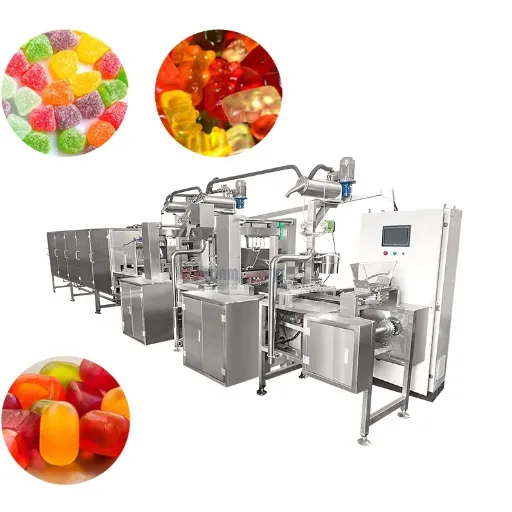
In order for gummy-making equipment to function well and last longer, they must be cleaned well and checked in detail. Cleaning needs to be done after every production cycle to avoid any residue accumulation that may cause contamination, mechanical wear, or distortion of product quality. Disassemble the removable parts such as mixing paddles, molds, and dispensing nozzles designed by the manufacturer. All parts should be cleaned with food-grade solutions using non-abrasive tools, especially focusing on those sections in direct contact with the gummy mixture.
⚠️
Critical Inspection Areas
- Conveyor Belts: Check for cracks, deformations, or wear that can hinder smooth production
- Mold Surfaces: Look for surface damage that could affect gummy quality and uniformity
- Moving Elements: Ensure proper lubrication with food-grade lubricants
- Dispensing Nozzles: Clean thoroughly to prevent blockages and contamination
Inspection procedures for critical parts must emphasize any clinical signs of wear or failure. For example, in checking conveyor belts and mold surfaces, cracks or deformations are sought which would not permit smooth execution of production activities. Hence, under the preventive maintenance schedule, manufacturers could find out issues before any unexpected downtime ensues. The establishment of this preventive maintenance schedule allows for the ongoing lubrication of moving elements with food-grade lubricants for maintaining smooth operations and preventing any premature wear. Adhering to the aforementioned guidelines ensures that the manufacturers will have their equipment cleaned and inspected, thus maintaining the quality of their products as well as extending the life of the equipment itself.
Common Problems and Troubleshooting Solutions
Troubleshooting is an essential intervention during interruptions caused by the malfunctioning or breakdown of equipment, to ensure the on-time completion of activities and hence the satisfaction of quality specifications. Below are the most commonly occurring problems, along with those that could be addressed and solved on time:
Equipment Malfunction Due to Residue Buildup
Problem: Residue accumulation reduces efficiency and may contaminate products.
Solution: Set cleaning routines with enzymatic or alkaline solutions. Use residue testing tools to verify complete removal.
Irregular Operational Output
Problem: Different results in size, weight, or volume due to calibration drift.
Solution: Use precision calibration instruments periodically. Implement digital monitoring systems with sensors for immediate variance detection.
Mechanical Wear and Tear
Problem: Key components (bearings, belts, gears) progressively lose efficiency.
Solution: Use vibration analysis and thermal imaging for early warning detection. Replace worn parts according to manufacturer’s instructions.
Electrical Failures
Problem: Power issues causing operational interruptions or equipment damage.
Solution: Check power input and test circuits with multimeter. Install circuit protection devices like breakers and surge protectors.
Sensor or Automation Errors
Problem: Software bugs or misaligned sensors causing operational errors.
Solution: Regularly update software and recalibrate sensors. Use diagnostic software tools to locate configuration errors.
Temperature or Pressure Fluctuations
Problem: Quality variations due to temperature or pressure instability.
Solution: Monitor with continuous data recording devices. Verify equipment airtightness and maintain pressure gauges and thermostats.
By employing thorough troubleshooting techniques and utilizing sophisticated diagnostic tools, manufacturers can proactively resolve operational issues, thereby reducing downtime and maintaining maximum production efficiency. A data-driven approach to maintenance will logically ensure both long-term reliability and compliance.
Best-Performing Practices That Will Ensure Excellent Quality
Monitoring and regularly calibrating equipment are crucial to maintaining high-quality output in industrial processes. Advanced sensing technologies (such as piezoelectric, capacitive sensors) actually offer real-time data related to, maybe, pressure, temperature, flow rates, etc. Calibrating these instruments on a routine basis using traceable standards would ensure that manufacturers obtain precise and accurate measurements.
Quality Management Framework
Advanced Sensing
- Piezoelectric sensors
- Capacitive sensors
- Real-time data collection
- Pressure monitoring
- Temperature tracking
Data Analysis
- SCADA system integration
- Historical performance data
- Trend identification
- Predictive maintenance
- Machine learning algorithms
Operators of industrial plants, given the data alone, look for trends to check for potential wear or failure in the past performance data recorded by the SCADA system. Predictive maintenance software would indeed enhance this possibility by using machine-learning algorithms to do real-time anomaly detection so that interventions can be made on time. Hence, a quality management strategy can be established to meet the highest industry standards.
Optimizing Your Gummy Production Line

Setting Variations for Gummy Types
Creating gummies with various textures, colors, and shapes requires meticulous consideration of production parameters. For example, the cooking temperature and time change with varying gelatin concentrations. Whether it is set higher or lower, for higher gelatin concentrations, it may require holding a little longer to ensure that it dissolves well and attains a consistent texture. Time and speed of mixing become essential factors, ensuring that flavors and additives are well dispersed. The opposite will result in a product that is not uniform.
Critical Parameter Considerations
| Parameter | Impact | Optimization Strategy |
|---|---|---|
| Cooking Temperature | Affects gelatin dissolution | Adjust based on gelatin concentration |
| Mixing Time/Speed | Ensures flavor dispersion | Balance to prevent air incorporation |
| Depositing Temperature | Controls mixture flowability | Lower temps for high water content |
| Cooling Cycles | Determines final texture | Extend for larger gummy sizes |
Depositing temperature is also a key factor in gummy manufacture, for it governs how slowly or fast the gummy mixture pours into a mold. Keep in mind that with softer gummy types, with a high water table, a lower depositing temperature is always better for the retention of structure within the gummy. On the other hand, a cooling chamber’s settings must be adjusted on the size and shape of the gummies it is making. With big quantities of gummies, cooling time increases straight from the point of view of preventing defects.
The adjustment of control parameters is possible through the use of automated sensor data or real-time monitoring systems, so production teams can render consistent outputs while minimizing waste. Departure from quality standards can be touched upon inline-quality control so immediately upon detection of a deviation, an operator can make corrective actions so that downtimes or production defaults can be averted. Setting mastery enables the production of many gummy products and at the same time assures food safety compliance.
Enhancing Efficiency in Small-Scale Production
Optimizing production itself would enhance operational efficiency under small-scale gummy manufacturing processes, while simultaneously integrating compact and economical technologies. Ingredient scaling requires accuracy in the formulation of each batch to avoid wastage and inconsistencies in the material. On the other hand, modular production equipment can be beneficial for small commercial setups with scalable production capabilities, allowing companies to avoid unnecessary overheads.
Small-Scale Optimization Strategies
- Ingredient Scaling: Precise formulation for each batch
- Modular Equipment: Scalable production capabilities
- Temperature Monitoring: Close control of parameters
- Tabletop Depositors: Compact automation solutions
- Micro-batch Processing: Reduced overhead costs
Technology Benefits
- Real-time Analytics: Performance data collection
- Bottleneck Identification: Process optimization
- Cycle Time Optimization: Increased throughput
- Quality Control: Consistent standards
- Market Flexibility: Niche product capability
Temperature should be followed closely so should mixing parameters; any of these not taken into account with exactness might impart a little change in texture or character. New advances in small footprint automation, including tabletop depositors and micro-batches, are giving small-scale producers the opportunity to further streamline their workflow while ensuring product integrity.
The analytics tools can actually offer efficiencies by gathering performance data in real-time, allowing operators to identify bottlenecks and optimize cycle times. Such measures ultimately increase throughput and ensure adherence to strict quality control standards, yielding consistent and superior-quality gummies that meet niche market or local demands.
Investment in Automatic Gummy Machines for Production Capacity
Complimentary automatic gummy machine is one strategic business decision to make for efficiency in production and optimum quality. In some cases, machines are prepared with advanced means, such as being controlled by Programmable Logic Controllers (PLCs) and seasonal high-accuracy servo motors in designing production processes and consistency. While a modern automatic gummy machine may reach averages of a few hundreds of kilograms an hour, this varies with the model as well as the type of gummies being manufactured.
Automatic Machine Advantages
🔧 Technical Features
- Programmable Logic Controllers (PLCs)
- High-precision servo motors
- Precise dosing systems
- Multi-layer depositing capability
- Automatic demolding systems
📈 Production Benefits
- Several hundred kg/hour capacity
- Uniform ingredient dispersion
- Reduced material wastage
- Enhanced hygiene standards
- Minimized contamination risk
🎯 Business Impact
- Scalable production capacity
- Multi-colored product flexibility
- Multi-flavored variety options
- Regulatory compliance support
- Competitive market advantage
With accurate dosing systems, these machines evenly disperse and portion ingredients, thereby minimizing wastage of materials. Moreover, these devices promote machine utility while insisting on less human intervention, thereby ensuring decreased contamination and increased hygiene standards, especially in processing food. Multi-layer depositing and automatic demoulding provide tremendous flexibility, allowing for almost all types of gummy production, including the multi-colored multi-flavored ones.
They can then grow their business while the journey of increased demand continues by investing in such automated lines. The automatic gummy machine not only aids in scaling up production but also adheres to regulatory standards, supplementing food safety standards to give manufacturers a competitive edge in the marketplace.
Future Trends in Gummy Manufacturing
New-age Technologies in Candy-making Machinery
One can see from the research that the candy manufacturing industry is undergoing dramatic changes, with every technological advancement aimed at increasing efficiency, consistency, and customization. The inclusion of AI and machine learning into candy-making machines is the key development. From production variables in real-time, such as temperature and the ratio of ingredients to cooking time, the technology ensures tight control. With such an extent of precision, wastages are minimized with product quality maintained at all times, while also providing for the identification of inefficiencies or probable defects in the early stages of production.
🤖 AI & Machine Learning
- Real-time production variable control
- Temperature optimization
- Ingredient ratio precision
- Early defect identification
- Waste minimization
- Quality consistency
🖨️ 3D Printing Technology
- Intricate shape creation
- Complex texture fabrication
- Personalized candy designs
- Niche market catering
- Reduced time-to-market
- Rapid trend response
🌐 IoT Integration
- Remote monitoring capabilities
- Real-time data analytics
- Energy consumption insights
- Machine performance tracking
- Production output optimization
- Operational efficiency maximization
Another area in sweetery where 3D printing is being exploited is confectionery. This modern technique provides opportunities to design highly complex shapes and textures usually difficult to realize with standard methods. The 3D printing facility gives the customized demands of candies and one-of-a-kind designs, hence affording an edge to manufacturers in servicing niche markets. It also cuts down time-to-market, thus enabling manufacturers to react quicker to consumer trends.
Last but not least, the installation of IoT devices on candy-making devices for remote monitoring and data analytic purposes has brought in some optimization. Such Internet-of-Things-enabled systems report valuable insights such as energy consumption, machine performance, and output volume and the like, thus being able to make a very high optimization of operations. With the enchancement of these energy-efficient methodologies and biodegradable packaging solutions integrated into production workflows, the new technologies in the future of candy manufacturing are going to be more adaptable, smarter, and green.
Consumer Preferences Shaping Gummy Production
The consumer trends create an atmosphere of concocting gummy products as a possible need nowadays. Most health-conscious consumers therefore seek products that are truly inline with nutritional requirements and lifestyle. In such a consideration, elevated demand now exists for gummy formulations that provide solutions labeled as vegan, organic, non-GMO, and free of artificial coloring and flavoring agents. Plant-derived pectin is hence increasingly used in the formulation as in place of gelatin to satisfy the vegans and vegetarians. These put pressures on the use of natural-sweetening alternatives such as stevia or agave syrup instead of regular granulated sugar to provide calories. Hence, the above mentioned newer trends are reviewing the gummy producers to undergo ingredient sourcing and also product alignment from marketing standpoint with health trends.
Consumer-Driven Market Trends
🌱 Health-Conscious Demands
- Vegan formulations
- Organic ingredients
- Non-GMO products
- Artificial-free options
- Plant-based pectin
- Natural sweeteners
💊 Functional Benefits
- Vitamin supplementation
- Mineral fortification
- Probiotic integration
- Adaptogen inclusion
- Immune support
- Stress relief properties
On the other hand, functional gummies are becoming popular as consumers look for products that serve more than just their taste. Vitamin, mineral, probiotic, and adaptogen gummies are becoming widely accepted as beneficial for support against immunity, stress relief, and the enhancement of sleep. Convenience matters, too: dexterity small and easy to take on the run, making gummies suitable for a lifestyle trend. Packaging enhancements, including biodegradable options and resealable choices, fit into the eco-conscious spirit, armoring the gummies’ trendiness further among the green consumers.
With the above-mention consumer-driven shifts, flexibility becomes paramount in gummy production. Having precision dosing and automated monitoring among the latest technologies are some of the means manufacturers attain varied demands of their include quality standards. Two major components, sustainability, and customization, also keep the entire globe in motion, just like consumer expectancies.
Sustainability Practices in Gummy Manufacturing
From my perspective, for gummy manufacturing to incorporate sustainability, there are a handful of considerations, with environmental stewardship being considered at least equally at each stage of production. One very important strategy is using packaging materials that are either biodegradable or recyclable. Simply by changing over to compostable films or plant-based polymers from the plastic wrappers currently in use, a manufacturer does a world of good reducing their impact on the environment. Further, when ingredients are obtained from suppliers certified sustainable, the raw materials are produced following ethical and eco-friendly measures, reducing soil degradation and biodiversity loss.
♻️ Packaging Solutions
- Biodegradable materials
- Recyclable packaging
- Compostable films
- Plant-based polymers
- Reduced plastic usage
- Environmental impact reduction
⚡ Energy Efficiency
- Renewable energy sources
- Solar power integration
- Wind energy utilization
- Reduced GHG emissions
- Energy-efficient machinery
- Water consumption optimization
🌍 Waste Management
- On-site wastewater treatment
- Production residue composting
- Fruit pulp byproduct use
- Closed-loop waste systems
- Material precision reduction
- Environmental burden minimization
Another essential practice involves energy efficiency improvements within the production plants. Using a renewable energy supply, which may include solar or wind, is one sure way to reduce GHG emissions. The utilization of machinery that consumes less energy and water also makes it more efficient. For instance, precision equipment would reduce waste during gummy molding, thus reducing the use of excess materials and all the environmental burden arising from the disposal of those excess materials.
Wastewater treatment and waste reduction then dominate the domain of sustainable gummy-making activities. Wastewater can be treated on-site, and residues of production, such as fruit pulp, can be utilized in composting or diverted into byproduct uses in other industries, thus closing the waste loop. These practices together provide an answer to how the gummy industry can actively position itself in terms of universals of sustainability, beyond merely conforming to evolving consumer expectations.
Reference Sources
Effective Gummy Depositor Maintenance Guide – GummyGenix
How to Clean Gummy Lines: Daily & Deep Maintenance Tips – GummyGenix
Gummy-Making Equipment: Complete Guide – TG Machine
How to Set Up and Optimize Your Gummy Bear Production Line – SinoFude Technology
Gummy Manufacturing: Pour and Scrape / Flood Pour Tutorial – CandyPros
Frequently Asked Questions (FAQs)
What is a gummy-making machine used for?
A gummy-making machine is designed to produce gummy candies in various shapes and sizes. This machine is imperative in confectionery manufacturing if the production process is ever to be optimized. A gummy machine allows precise mixing and heating of ingredients, maintaining consistent gummy quality. Often, such machines are equipped with a depositing system that fills the molds with the bearing accuracy, hence allowing for the easy manufacture of almost all sorts of gummy products. The automation that comes with these gummy-making machines can substantially increase productivity and efficiency within a candy-making factory.
How does a gummy machine work?
The mixing, heating, and depositing of the gummy mixture into the molds are the primary operations a gummy machine undertakes. First, the ingredients are mixed; later, the mix is heated to dissolve the gelatin or pectin used in the gummy preparation. When the gummy solution is thick enough, it is put into the depositing machine, which pours the gummy solution into the molds. After the deposits are poured into the molds, cooling occurs to allow the gummies to set. They can be either semi-automatic or fully automatic, depending on the production needs.
What are the advantages of an automatic machine for depositing gummy solutions into molds?
Automatic gummy pouring machines offer great advantages for efficiency and labor savings. At times, these machines may be regarded as productive, churning out thousands of grams of gummies per hour. This process ensures that gummy mixtures are deposited with accuracy for uniformity of products. Such machines may very well be equipped with a PLC control panel for easy monitoring and adjustments during production. Indicators for such a high degree of automation would be helpful in improvements concerning product quality and hygienic maintenance in the confectionery industry.
Can a gummy-making machine make a different kind of candy?
The particular type of equipment used to manufacture candies is varied and flexible enough to produce different kinds of soft and hard candies. With the proper arrangement, this machine can be manipulated with different formulations and processes, thereby giving the confectioner a wider opportunity of programming for the product. For instance, the equipment could feature nozzles and molds particular to the kind of confection produced. Such applicability comes into handy for candy manufacturers wishing to try out various products without purchasing machines for each one.
What is the average capacity of a gummy-producing machine?
The production capacity of gummy equipment varies widely depending on the type of machine and its respective configuration. Typically, a good gummy machine produces between a few hundred and a few thousand gummies per hour. The production capacity is influenced by various factors, including mold size, conveyor system speed, heating process, and mixing process of the equipment. Hence, producers have to select their equipment suitably according to their own production requirements to fulfill the target market’s demand.
What features should I look for in a gummy machine?
Some factors should be considered when purchasing a gummy machine to fulfill production needs. Machines should be fabricated with high-quality stainless steel to stay for longer and meet sanitary standards. The control unit looks over production progress and makes adjustments as needed. Automatic filling, temperature control, and cooling tunnels, among other features, greatly increase efficiency. You should also consider optional equipment so that you can produce virtually any type of gummy product and other confectionery.







Shanghai Fude Machinery
Shanghai Fude Machinery Manufacturing Co., Ltd is a leading manufacturer of top-notch gummy and cookie making machines with more than 15 years’ experience in the industry. We provide creative equipment that ensures accuracy and speed while sharing intelligence with food producers. Shanghai Fude remains to be one of the most reliable companies for food machinery because of its dedication to perfection.