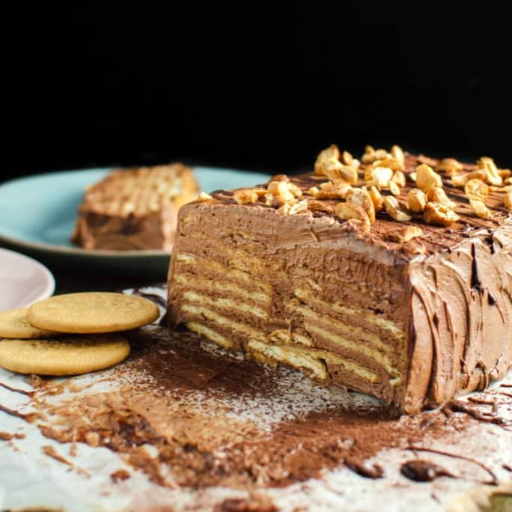
The combination of rich chocolate and crispy biscuits creates a...
Read More


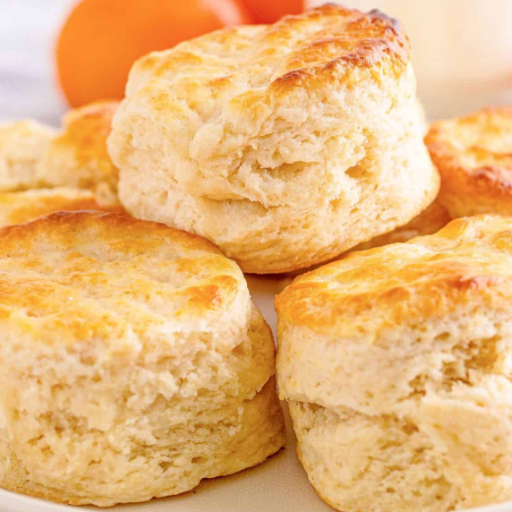
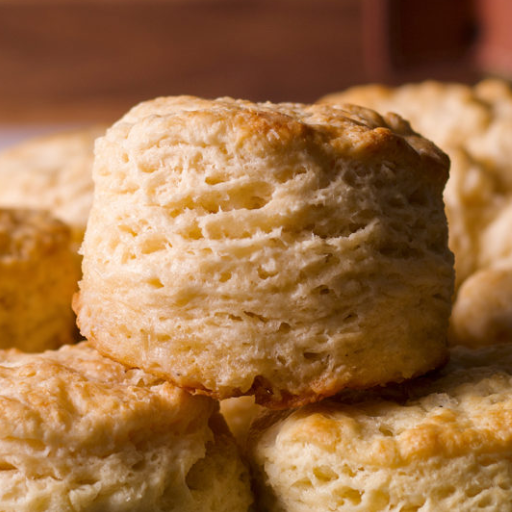
Are you in th quest fore a great fluffy buttermilk biscuit recipe to elevate your baking prowess? Of course you are in the right place! As we plan for a cozy weekend bake, our homemade biscuits fit perfectly to fill in as a magnificent accompaniment to this side dish with meals: from an expert’s perspective, the making of your biscuit is quite easy, with pro tips assured in the recipe. From obtaining the golden, flaky crust which is indeed the main appeal down to the correct balance of ingredients, this post will taunt you through it. These buttermilk biscuits will win such appreciations from your siblings and friends!
Introduction to Fluffy Buttermilk Biscuits
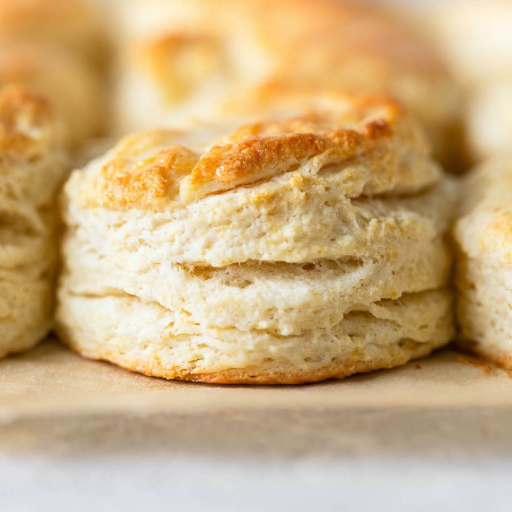
The Allure of Homemade Biscuits
The idea of homemade biscuits seems to forever have the turning ability to recall comforting warmth and nostalgia. Crumbling off its flaky walls, the heavenly biscuit layers, with their gourmet flavors, endear the hearts of diehard fans into loving this family-favorite side dish. Unlike store-bought treats, homemades are naturally geared to cater for personal tastes by adjusting the recipes for preference and significance, be it with pure butter, honey drizzle, or coarse gravy.
Quality and freshness certainly shine through when the made-for-biscuits alternative is seriously embraced! It’s a largely uncommercialized event that lets you freely pick any thing or flavor that just will hardly be agreeable to you if you are now used to the cons of the hard stuff. If nothing else, making biscuits at home can very deeply be a continuum that elevates almost any basic scenario from raw dough into nice, brown-topped, soft, and fluffy crusts.
At the heart of baking your biscuits is a whole new level of fun in terms of creativity, self-empowerment, and establishing social bonds by either perfecting a recipe, joining a family member while baking for some occasion, or merely baking for your home. The techniques and clues presented to you give ample room to do so, by which one may wellfully perfect his or her pleasure in baking these true-classic treats in his own kitchen.
Why Buttermilk Makes a Difference
The hierarchy of the biscuit begins with buttermilk. Buttermilk’s acidity works on the bicarbonate of soda to yield CO2, creating some lift that establishesthe airy texture frequently associated with tender layers. So the crumb is literally “short” and yummy owing to the extreme sidad mentioned. The buttermilk reacts with the baking soda such that, with no additional baking powder, the biscuits rise to full volume.
Buttermilk, of course, gives the biscuit its tang. This tang enlivens the biscuit mix without throwing off balance the palate by excessively resonating the entire flavor. Instead of making the end results taste painfully rich with butteriness, it will harmoniously counter these known flavors to produce a delicate flavor to a much-maligned baking dish.
However, the role of buttermilk in helping the texture of the bread. Through proteins in buttermilk and its acidification, the structure of the dough was broken down and thus kept biscuit dough fine and fluffy rather than capable of chew. A chemical attribute of buttermilk poses one of the essential properties to achieve the right consistency of a biscuit.
Essential Ingredients for Fluffy Buttermilk Biscuits
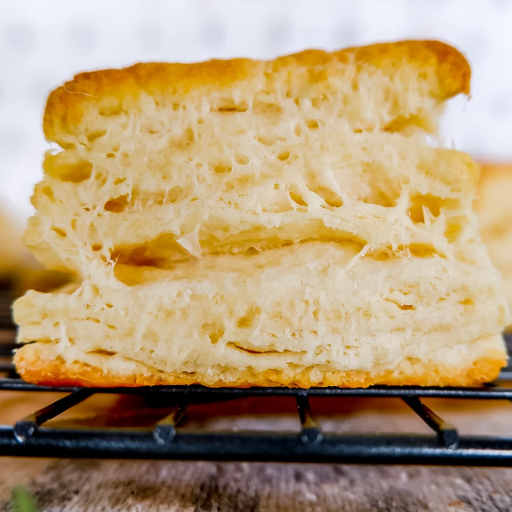
Key Ingredients and Their Importance
All-Purpose Flour
The all-purpose flour gives structure and stability to biscuit dough. Its protein balance yields superb texture-light but firm enough that it holds its shape. The flour, thus, allows the biscuit to rise without feeling heavy at all.
Baking Powder and Baking Soda
Both leavening agents are very important in creating the right fluffiness of a buttermilk biscuit. Baking powder, however, ensures that the dough functions evenly in terms of lift with the egg and buttermilk. In the meanwhile, baking soda’s ability to react on the acid of the buttermilk is the ultimate lead up to the baking soda part of the dough rising. In conjunction, they infuse the moist and texturally contrasted lift that makes biscuits great.
Cold Butter
To produce flaky biscuits, it is important to use rough butter. Cold butter, as it melts in the oven, releases steam which then creates small air pockets throughout the crusts, leading towards flaky and tender biscuits. Grating or dicing the butter into small bits before adding it to the dough guarantees even distribution, with inconsistent butter distribution resulting in inconsistent biscuit quality.
Buttermilk
Buttermilk is what gives biscuits their flavor and texture, whereas buttermilk’s slight tang breaks down some tough proteins of the dough, softening it, and liquid hydrating helps bind all the key ingredients. This yields happy, light, slightly sour biscuits.
Salt
Salt enhances the product’s taste by striking a balance between the tangy buttermilk and the butter’s rich and mild flavors. It also strengthens the dough’s structure, ensuring that the biscuits rise but retain their form.
If you mix all these together in the right proportion, then you will form a naturally rising fluffiness that is no less than delicious in taste and light in texture. Moreover, such care as to handle the dough keeping the ingredients cold while trying to avoid overwork more enhances the quality of the final product.
Choosing the Best Buttermilk
The crucial start for selecting the best buttermilk comes when you understand the label and what should be looked for. The first and foremost target is dairy products, with all-natural buttermilk produced without be from-carbohydrate materials. When cultured, or a byproduct of milk and cheese processing, a thickly fermented high-acid food, buttermilk contains the perfect flavor to bake or cook with. You should always choose a product that has a culture label.
Moreover, a decision for high or low fat content must be considered, where it alters the rich excellence one acquires with their recipes when combined with buttermilk. This becomes a significantly different factor in overall flavor or mouthfeel, based on apps. Knowing that organic or locally sourced buttermilk is available to customers using it as a culinary focus to enhance a fresh taste. This all promotes sustainable farming initiatives as well and is something to choose from.
Also, one must consider expiration and storage. New or fresh batches can give you very good results, whereas some old aged lady’s buttermilk may have lost much of its superlative. Make sure to keep it in the refrigerator and consume it as directed for tangy flavor and texture, which will ensure that your baked goods and recipes will be superb.
The Role of Cold Butter in Fluffiness
The cold butter is essential in creating light and airy baked goods. Biscuits, pie crusts, and scones, three common yet distinctive recipes, all use cold butter. The incorporation of cold butter in pastry dough allows it to remain solid and form small pockets within the dough. When heated in the oven, these little bits of butter melt, creating steam, which not only layers the dough but also provides a tender texture; the flakiness and lightness that is desirable in most recipes is achieved.
Using cold butter safely ensures that it does not thoroughly break away immediately within the flour and get tough. A yeast dough kept stiff throughout preparation has better consistency in the finished product by chilling. There are several ways to work with cold butter, such as pre-chilling or grating, that make even distribution easier without breaking it.
It is indispensable to maintain a chill on the butter and dough during the making process for it to take effect. Thus, the stage that involves the dough being exposed to room temperatures should be reduced, and in cases in which butter seems like it will melt too soon, the dough should be refrigerated. A widespread awareness of how cold butter contributes to consistently light, flaky, and flavorful results will help in better effect of your baking techniques.
Step-by-Step Instructions for Making Biscuits
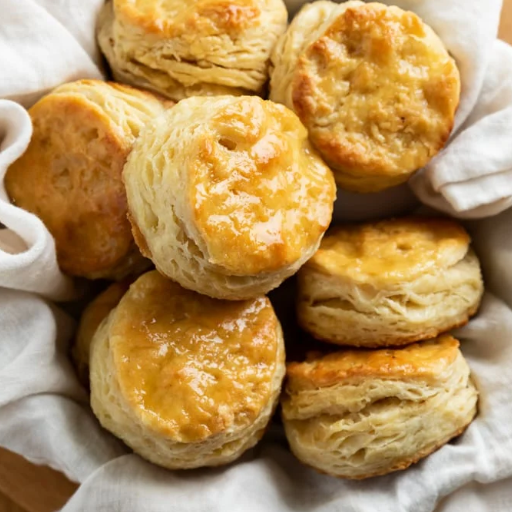
Preparing the Dough
The making of really-good-quality dough for biscuits all kick starts with neatly and quickly getting together all ingredients, keeping butter sufficiently cold. All-purpose flour, baking powder, salt, good cold butter, milk, or buttermilk are needed to make great biscuits. Measuring every ingredient accurately is important for the dough’s consistency and structure, while you should keep the butter cold just till when you are ready to use it and also work quickly towards avoiding the softening.
Put all dry ingredients in a massive bowl and get it all mixed up properly. The cold butter must then be sliced into tiny cubes and combined with the flour for the course of their becoming. Use a pastry cutter, or else with the tip of your fingers, work in the butter quickly into the flour mixture till it looks like coarse crumbs. Do not overwork it, as the larger pieces of butter will help in the flakiness of the biscuit.
Add only as much milk or buttermilk as is absolutely needed to mix any dry ingredient, stirring with caution until just enough pastry has been formed. Do not overmix; otherwise, you will end up with tough biscuits. Once the dough has left over, portion dough on a floured work surface and knead upon it, just enough to hold its shape; doing so, casual treatment with dough will generate the best biscuit possible-flaky and tender.
Shaping the Biscuits for Maximum Flakiness
The only way to achieve ultimate flakiness is by remembering to shape the biscuits delicately. Gently pat the dough to make it a level and thick sheet, roughly 1 inch in thickness. Having said that, the rolling pin might make biscuit dough more susceptible to turning out flat since either the air cavities which cause flakiness could be easily pushed out or the dough itself losing its delicate nature.
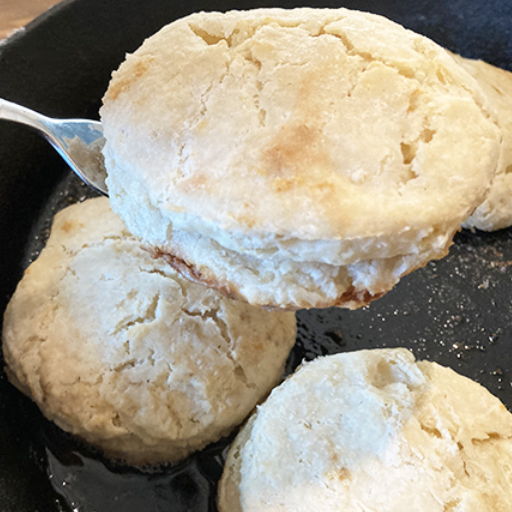
Utilizing a round biscuit cutter driven firmly with vertical motion cuts the dough. Whatever you do, don’t twist it–twisting will seal the newly cut edges, rise, and all of that awesome stuff will not happen. In between each successive bit, give your cutter a quick dip in the flour. Transfer biscuits to the baking sheet and gently mean in close clustering with space set between each of them.
If there are any scraps left from cutting out biscuits, gather them carefully and treat gently without overworking. Puddle out the second layer. One may not achieve the maximum flakiness of those cut first out, filling biscuit layers with fluffiness and lightness because of skill and ease in handling and forming.
Baking Techniques for Big Fluffy Biscuits
Big and fluffy are instructions for reaching the peak of fly biscuits. And that is all about methods and materials. To begin with, all goods must be kept chilled, mostly the butter so that it is melting in the oven, causing steam and helping biscuits to rise and develop a nice texture. To cut the butter into small pieces, refrigerate it, and only take it out right at the time of mixing should be productive for you.
When mixing the dough, overwork resulting in hard and tough biscuits should be carefully avoided. Mix gently until just combined, leaving each piece of butter visible. Hydration on any extra would be the recipe for strong gluten, resulting in great, thick, and hard fly biscuits. Moreover, taking the next step completely depends on how patiently one rolls out the dough. The key point is that it is uniform in thickness of approximately 1 inch to ensure even baking and final rise.
Use a sharp biscuit cutter or knife to make clean cuts. The cutting should be straight up and down. Also, be mindful to not twist the cutter as twist-seaming biscuits would cause the rise to turn sluggish and the layers to be stumpy. Usually, biscuits are to be baked in a hot oven, with the temperature somewhere between 425 to 450 degrees F (that is 220 to 230 degrees C) before working leavening agents can rise quickly and produce tall flake layers.
Troubleshooting Common Biscuit Issues
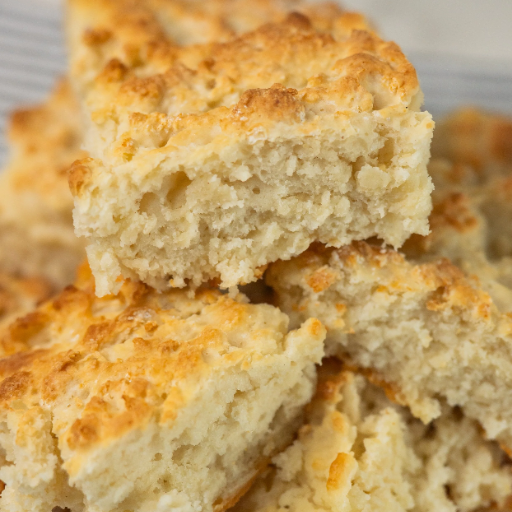
Avoiding Flat Biscuits
Flat biscuits are a common problem that can arise due to several factors while baking. Proper rising of biscuits involves looking after ingredients and technique.
First of all, the freshness of the leavener has to be checked, such as with baking powder and whole baking soda. Outdated leavening agents become weak and develop dense, flat biscuits. Store them in a dry, undamaged environment preceded by manifold/bifurcated replacement. Inaccurate measures of the two leavening agents whether short or long weigh may bring an impediment to rise.
The second step relates to working the dough softly in order to avoid overworking it. When the dough is stretched excessively, it may have a tough, somewhat flatter interior. This may, in turn, be brought on by the formation of excessive glutenin caused by overly enthusiastic kneading. In order to remain as untouched as possible while cutting through the dough, the cuts should be absolutely correct, allowing edges to gain as much breadth as they will during the baking process. The final rising should take place at the proper temperature which usually will lie between 425 and 450°F. The elevated temperatures provide optimum speed for the very fast rise resulting in the largest, heavenly, and soft biscuit layer. Such general basic steps prevent one’s biscuit from being flat.
Preventing Tough Textures
To avoid developing tough textures in the creation of biscuits, the dough has to be handled very gently. When the dough is overmixed or overkneaded, a good deal of gluten develops, causing round biscuits to become pretty heavy and chewy instead of light, brittle, and flaky. In an ideal baking scenario, the dry ingredients should be just mixed so that they hold together; dough should have little handling.
Another contributing factor is the type of fat you choose for the recipe. When the butter, shortening, and fats like it to be submitted are very cold, proper biscuit-making can ensue, resulting in all the flaky layers sandwiched in between. As soon as butter hits 70âC it melts and releases steam, which will make the dough rise forming this texture, moist and deliciously ready to even pull. Cutting fat into the flour to the degree that thats somewhat like coarse crumbs lands just where incorporation has been achieved without straining your dough.
Finally, when baking, please pay attention to factors, such as the high heat. Ideal for making biscuits rise quickly, before their outsides can set, a temperature around 425°F or 450°F is best. Risers should also be placed close together on the baking sheet as heat between the biscuits causes them to grow upright and not lie about wider. This will help you make the most tender and flaky biscuits.
Serving Suggestions and Storage Tips
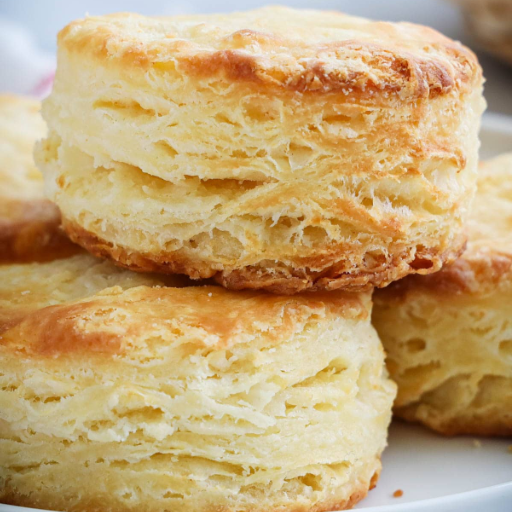
Creative Pairings for Fluffy Buttermilk Biscuits
Light buttermilk biscuits are very versatile and can handle any flavor, as sweet or salt alongside. One of the most sought-after is strips of biscuit and creamy gravy, such as sausage or mushroom gravy, perfect for a warm breakfast. The richness of the gravy somehow really brings out the very spongy, buttery texture of the biscuits.
For a sweet touch, consider other versions for serving with fruit preserves, honey, or whipped cream among other good choices. Fresh seasonal fruits such as strawberries or blueberries provide a bright, satisfying complement for the dish. Refined options offer a light dessert or an enjoyable extra to the ritual of tea time.
More powerfully hearty if you put in sandwich fillings. Are these with fried chicken, bacon, or scrambled eggs for a genuine, appealing experience. The soft crumb of the biscuits will offer a welcome contrast to the savory ingredients and add much homemade charm to any meal.
Reheating Tips for Freshness
So that your reheated meals taste fresh and near-original, it is obligatory that the reheat is done correctly. So give the food the appropriate temperature and mode of reheating that it deserves. For example, soups and stews are best reheated for a few minutes on the stovetop while stirring, in case of baking goods are wrapped in foil and heated in the oven in order to keep their moisture and softness.
While salads, soups, and stews are ideal to reheat, it may be really important to re-heat them while still having textures approximately as they were. Wet macronutrient meals like soups and salads have to be reheated with a lot of initial addition of the same regular ingredient sans too much dilution. Reheat these on an oven with bundled layers, partially covered in a microwave oven, covered in a tight-fitting vessel in the electric oven, or inside a double boiler.
Other dishes need to be layered in a booby trap-reviving state-mainly if one did not dry them too hard, though they were not to get too moist either-neck-butmost have to leelain. Reheating was up on a dry pan or a toaster oven. Doing it so will take away from the crisp nature expected. And reheating will cause all the stay-coming-with-a-sudden-bang: as in, it happens to feed your life-force vitality to its last little point.
Frequently Asked Questions (FAQ)
Q
What is a simple, big biscuit recipe for dense, fluffy buttermilk biscuits?
A: An instant hot biscuit recipe includes the following instructions: Start by combining the dry ingredients (flour, baking powder, soda, and salt) in a bowl, just mixing them up so the dry ingredients can all get together; then give your butter or shortening the quickest head start when positioning it inside the flour, and gently smudge these fats in addition to your biscuit mix with your pastry cutters. Meanwhile, give your sealed buttermilk jug a quick shake to distribute the clots throughout the buttermilk. Keeping the fats and buttermilk intact, fold these into your dry mix until all is moist enough to hold in a hulking, slumped, and sluggish form. On a floured work surface, set your butter and clumpy mixture, pat it out to three-quarter-inch thickness, and commence cutting biscuits with your ardor-cutters to lift cookbook-quality biscuits through that frozen oven to 450 degrees for a glossy, golden-brown color, somewhere about 12 to 15 minutes for those tall fancy biscuits.
Q
How do I get tall biscuits every time and what are your tips for making them?
A: To get tall biscuits every time, handle the dough as little as possible and use very cold butter during mixing. Press the dough till about 1-1.5 inch high, then straight down cut your biscuits using the cutter, without twisting. Some other factors are that a floured surface should be used with folding/lamination for layers, as well as that pressing them closer in a skillet would make them rise up more. Preheat the oven to 450 degrees Cook until fully golden brown and well at center for deliciously high-risen buttermilk biscuits.
Q
Can I make a homemade biscuit recipe without buttermilk and how to make a buttermilk substitute?
A: A potential buttermilk substitute can be made substituting 1 tablespoon of vinegar or lemon juice in a cup of milk and letting it sit for 5 minutes. This cold buttermilk substitute will give you the perfect analogous rise and tang to your larger biscuit application. Remember, the recipe calls for this item cold, thus keeping the butter from melting and allowing flaky, fluffy biscuits to form.
Q
Which flour should I use in a big biscuit recipe- the self-rising flour or all-purpose flour?
A: For convenience, use self-rising flour as it contains baking powder and salt, but if you use all-purpose flour, then you have to add baking powder and a teaspoon salt (and baking soda if using real buttermilk) in accordance with the recipe. Toward the end of the biscuit-making process, control the texture of the dough by carefully incorporating measured portions of this leavening. Upon substituting for this recipe, I did beat the powder in hard with the rest of the powdered leavening into another mixture that was sure to rest and then form this dough thrown topsy-turvy.
Q
What is the difference between cut biscuits and drop biscuits and can you make the big biscuit recipe into drop biscuits?
A: There is a difference between cut biscuits and drop biscuits. Cut biscuits are made by patting dough on a floured surface and then cutting it with biscuit cutters for tall, and quite appealing, and layered biscuits. Drop biscuits are spoonfuls of dough directly onto a baking pan, more like an easier, more rustic recipe, not layered or completely separated from each other as they turn out in the former case. To make drop biscuits from a big biscuit recipe, take the big biscuit’s dough and make it a little wetter. Make portion sizes with an ice cream scoop or spoon and place them on a baking sheet just after cutting the dough, and in about the same amount of time as oven temperature, whether you are cooking drop biscuits or cut out biscuits.
Q
How do I make the biscuits and the gravy using big fluffy biscuits, and sausage gravy?
A: Big fluffy biscuits or oven-baked large biscuit halves are used for biscuits and gravy, while it is itself sausage gravy. For the sausage gravy, cook together sausage with the flour, which is mixed into a roux, and then slowly whisk in the milk until thickened. Add salt and freshly ground black pepper and serve the mixture on top of a split biscuit. This ever-popular combination between homemade biscuit preparation and sausage gravy gives one of the most extraordinary breakfast biscuits.
Q
Please explain the reasons for not rising in biscuits made with buttermilk. How can one make these biscuits light and fluffy again?
A: The following are some of the typical mistakes that have hindered biscuit fluffiness. Some of the reasons that can result in dense buttermilk biscuits are overworked dough, using baking soda older than six months, and not enough flour to get the right texture and make them thick. Aside from the baking list, the best thing to do is mix some other recipes out there with buttermilk biscuits. Try to see if this helps quiet down your biscuits for few seconds.
References
-
Biscuit Recipe From Shipmans Restaurant
A detailed recipe document outlining the preparation of biscuits, including mixing dry ingredients and other steps. -
Anzac Biscuits – Monash University Library
A historical recipe for Anzac biscuits, provided by Monash University, showcasing traditional ingredients and methods. -
Chocolate Biscuits You’ll Actually Love – Institute of Culinary Education
A professional recipe for chocolate biscuits, including precise measurements and preparation technique - Leading Gummy Machines Manufacturer in China offering top-quality products
🥐 Happy Baking! May your biscuits always rise tall and fluffy! 🥐


Shanghai Fude Machinery
Shanghai Fude Machinery Manufacturing Co., Ltd is a leading manufacturer of top-notch gummy and cookie making machines with more than 15 years’ experience in the industry. We provide creative equipment that ensures accuracy and speed while sharing intelligence with food producers. Shanghai Fude remains to be one of the most reliable companies for food machinery because of its dedication to perfection.