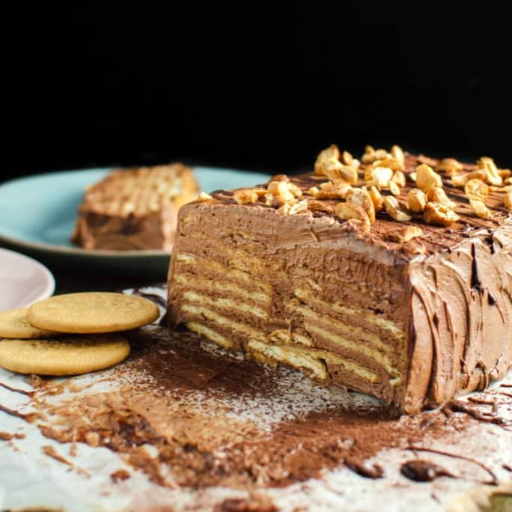
The combination of rich chocolate and crispy biscuits creates a...
Read More



Gingerbread treats prove to be the most festive holiday treat because they create both warmth and joy through their holiday flavors. The kitchen becomes filled with a rich spiced scent which enables people to create various possibilities through gingerbread that still retains its classic status. This flexible treat provides different options to people who want to bake soft chewy cookies for family members or create a decorative gingerbread house or prepare an impressive gingerbread cake for their guests. This guide provides complete gingerbread information through its collection of baking tips and baking recipes and baking resources which will help you advance your baking skills. You need to prepare for an active holiday season because gingerbread will bring you multiple delightful treats which will create special memories in this festive time.
History of Gingerbread

Origins of Gingerbread
In antiquity, gingerbread had its birth as a spiced honey confection. Greeks and Eqyptians made similar sorts of honeyed goods for their religious rituals. Ginger started appearing in the recipes at an extended period; nevertheless, it has become the plant that carried “Gingerbread” into existence in postmodernity.
In the Middle Ages, though, gingerbread found favor with the celebrants and the sweet-mongers graced many a festive table. Wok-bound ginger naturally gained ground through merchants’ trade toward the West, and soon bakers were making debonairly shaped gingerbreads perfect for their bakes. Gingerbread fairs, which attained municipal prestige, occasionally included rare and carefully wrought foods-anointed in good grace or affection when disposed of.
Gingerbread has taken on flexible form in both soft, bread-like appearances and in snappy, crumbly, and cookie-like manifestations. The holiday season ushers the recipes from gingerbread from various cultures and traditions in their wide assortment, symbolizing their universal spread. Through its application to decorative houses and spicy cakes that folks assemble during Christmas, gingerbread represents both holiday merriment and artistic skill.
Gingerbread Through the Ages
Gingerbread originated in ancient civilizations which created their first recipes that combined honey with spices for both food and medicinal use. Spiced dough proved its ability to create different types of baked goods when ancient Greeks and Egyptians used gingerbread-like sweets during their religious ceremonies. Europeans began increasing their use of ginger as a spice in the Middle Ages after traders brought the ingredient to their continent. Bakers started developing new types of gingerbread when they began using ginger as a baking ingredient.
The art of decorating gingerbread has been developing in Europe since the sixteenth century. Craftsmen from Germany started designing gingerbread cookies in the most elaborate shapes and designs by far, with the advent of gingerbread-house decorations becoming part of the Christmas tradition. The gingerbread cookies and houses made by hand have candies on them and are covered with icing, which is a conflation of celebration and artistry. Though first embraced by the European population, it spread into the United States, where it then diversified, melting and combining with regional flavors and ingredients.
From cultural pastimes, gingerbread has become a strong worldwide symbol. When the gingerbread house was designed by employing traditional spices and shapes, it became a feast proper to the celebration of something ancient. The new gingerbread formulas are being passed down the generations, pairing the celebrated spiced cake with appearance and taste aesthetics. This ancient dessert offers a shared experience bringing together families, friends, and people from all age groups and backgrounds, while existing as a crucial element in both culinary arts and artistry.
Regional Variations of Gingerbread
Gingerbreads of Regions. Some special sorts of gingerbreads, namely types of recipes, are typical of local customs and preferences elsewhere. For example, in Germany’s gingerbread recipe in the street or in small restaurants, we call it Lebkuchen. From the soft, cake-like texture to the hardest version, Lebkuchen includes all kinds of honey, spice, and nut ingredients. There are those coated with a sugar glass, and many are designed with intricate designs to be both dessert and a piece of festive decor.
On the other hand, the scandy is famous for gingerbread cookies, their sharpness, and a strong spice flavor; they generally have forms such as hearts, stars, and Christmas shapes. One of Sweden’s pepparkakor is gladly served during the winter holiday season to warm and cheer up the homes. Other than that, in Norway, the pepperkake cookie itself stands to be erected in events, which promotes the linkage between culinary tradition and creative endeavor.
The United Kingdom gave rise to its variations in the form of gingerbread men and loaf-style gingerbread with the addition of a mellow black treacle or golden syrup mix to emphasize its aromatics. As it is part of the good ol` day memories of fairs and festivals, so gingerbread remains an interesting and long-lived cultural adage in the British world. These regional versions showcase the ways in which the gingerbread recipe has shown the culinary good of generations and cultural impression through the creation of various divergent influences.
Classic Gingerbread Recipe

Ingredients for Gingerbread Cookies
The necessary ingredients for making classic gingerbread cookies include:
- 3 cups (360g) of all-purpose flour—Makes the base of the cookies. Be careful to measure out all flour quantities for the cookie to have its proper texture.
- 1/2 teaspoon of baking soda—Helps the cookies to rise gently and have a very tender texture.
- 1/4 teaspoon of baking powder—Adds lightness to the dough.
- 1/2 teaspoon of salt—Balances the sweet and spicy by enhancing the flavor.
- 1 tablespoon of ground ginger—The real hero of taste.
- 1 tablespoon of ground cinnamon—Adds a spicy flavor with a slight hint of sweetness.
- 1/4 teaspoon of cloves—Make a lovely earthen tone together with ginger and cinnamon.
- 1/4 teaspoon nutmeg—Gives warmth and depth to the flavor.
- 1/2 cup (110g) unsalted softened butter—Adds edibility and softness to the cookie.
- 1/2 cup (110g) sugar—Makes the biscuit soft and sweet.
- 1/3 cup (80ml) molasses – an indubitable key ingredient courtesy of which gingerbread gets that rich flavor and enticing darker color.
- 1 tablespoon pure vanilla extract-Offers an interesting, full flavor with a hint of sweetness.
- A basic necessity for baking, eggs in the recipe act as a binder and send moisture through the dough.
This trio of ingredients balances out the spice, sweetness, and texture to make that kitchen-circa-1978 gingerbread cookie. Get the dough ready, roll it, and bake your favorite shapes!
Step-by-Step Instructions to Make Gingerbread
- 1
Gather your Following Ingredients:
G ather up everything you need to put in the recipe. Assure that the butter is softened. Measure your spices, sugar, flour, and liquids like molasses and vanilla extract. - 2
Co’s tant to matter:
Cream butter well. Add sugar, vanilla extract, molasses, and eggs. Add dry ingredients with whole egg, spices, and flour in small quantities until the dough comes together-dough shouldn’t be too wet; instead, it should be a soft, pliable cookie paste. - 3
Chilling of the Dough:
Wrap the dough in plastic wrap and refrigerate it for at least an hour. Cooling of the dough hardens the dough and makes it easier to roll and give shapes to them. - 4
Roll out & Cut the Dough:
Preheat your oven to the specific temperature. Sprinkle a bit of flour on a clean working area then gently roll out the dough to a thickness of 1/4 inches. Use some cookie cutters and mold the dough into such pretty shapes before gently transferring them to the already lined with parchment paper baking sheets. - 5
Bake:
Take care to check on baking cookies in a preheated oven for the required time, which is normally 8-12 minutes, depending on how big or how thick-or both-the cookies are; check on the edges, which should be firm but not brown. - 6
Let Cool and Decorate:
Allow the cookies to rest on the baking sheet momentarily after being taken out of the oven before transferring to cool fully in a wire rack. The cookies may be iced or decorated as desired.
Tips for Perfect Gingerbread Cookies
- Chill the Dough:
Dough that has previously been chilled in the refrigerator for a minimum of 1 hour will be less sticky, and in turn, easier to handle. Furthermore, because of this technique, these cookies will hold their shape while they are baked. - Parchment Paper:
Rolling and rolling all the way to the burrito gives an even thickness to the dough and makes for quick cleanup. Wax paper will keep the dough from sticking to the rolling surface, so still will the roller. - Keep Track of the Cooking Time:
Observe the gingerbread cookies closely while they bake, as gingerbread will burn to crispy brown from soft faster than you think. Remove if the edges appear firm without becoming golden brown. Also, if the cookies are very thin, they might only need to cook for a shorter time while the very thick ones may require slightly longer baking. - Choose Your Decorations with All Caution:
Bear in mind that when you decorate with icing, wait cool to room temperature so that your icing won’t melt all over placed sugar-coated dough or colored decoration at random; you’ll have to get a piping bag with a very fine tip to carefully handle any design.
Should you follow the gist of the instructions, you are probable of having the perfect balance of flavor in your gingerbread cookies, thus maintaining their shape and creating an exciting delight for all occasions.
Gingerbread Cake Variations
Baking Techniques for Gingerbread Cake
Gingerbread cake does require some preparation to get the precision needed for the perfect recipe. The batter must first be measured correctly-a common hat here. Use room-for both, scratch that, temperature eggs, butter, and milk are mixed together to form batter; the batter must be evenly mixed. One should sift it all together, dry ingredibly speaking, that is, while the sponge is still with cinnamon, spices, and ginger, to remove lumps, another method guaranteed to avoid possible mess-ups and afford flavor to the sponge.
Mixing must fail to give away the essence of the cake’s essence; mixing should be performed softly, barely stirring otherwise thick; the absolute limit of mixing must be a couple of yeses in fact, not anything ugly on top, making the sponge most light and airy. Heat your own gas to make other beds and then scale the bird out until fairly warm, layering the cake on the metro and leaving it to cook for reasons of the thermal period. What needs to be avoided also, please bear in mind, is the constant nagging annoyance with the oven’s door, neither must it be opened to him not very frequently10 with this assumption, clearly since the cake tends to puff this far, bubbling from the edges and flushing.
When a toothpick inserted into the cake’s center comes out almost clean, with an ear bit of moisture and crumbs, that means the cake is cooked properly. It would be lovely to allow it to cool without hurrying up to decorate it. When done correctly, your cake will be moist and succulent and be perfect for any occasion!
Serving Suggestions for Gingerbread Cake
Gingerbread cake is a versatile dessert that goes really well with any number of accompaniments to promote the comforting spice taste. A good idea is to serve it like sweet bread with either fresh whipped cream or a serving of vanilla ice-cream, both of these creating a contrast with the gentle sweetness of the gingerbread and helping to lift the mild spicy taste-teeth feel to a great balance.
Something else that pairs well with the cake is a light drizzle of icing, and lemon or orange is right at the top of the list of icing flavors. The nature of citrus intensifies the clarity of flavor, and it develops more rind, hence giving something tangy in sweet gingerbread. Almost immediately, sprinkling it with powdered sugar after frosting will really complete the presentation.
For a more celebratory feel, pair the gingerbread cake with spiced fruits such as poached pears or baked apples. These fruits both complement the cake and introduce a different textural element to go with its taste. Never mind the method you intend to decide upon, gingerbread cake is best enjoyed slightly warm in the company of its fragrant spices and moist crumb.
Advanced Gingerbread Decorating Techniques
Using Royal Icing for Decorating
Generally speaking, royal icing is an ideal medium for decorating gingerbread and provides an excellent vehicle for making intricate designs. The magic of royal icing resides in its simplicity with a combination of sugar, egg whites (or meringue powder), and a few drops of water into a dry royal icing that can be piped into beautiful designs, outlining, borders, and structural elements for gingerbread projects. Its perfect consistency can be hardened or watered down to your liking, perfect for serving as a basic medium for decorating varied degrees, for example, in outlining to filling.
Make sure you get an icing bag or squeeze bottles that are clean. These are fitted with nozzles or a tip, willing to let you give a smooth flow and more precise decorating. Royal icing needs to start with a piping consistency slightly thicker than that for flooding, so that the lines do not suffuse; when these are dry, the center areas can be flooded. Flood the areas with a thinner icing; allow the excess to fill the spaces. A skewer or toothpick really aids in pushing icing into corners or other confined spots to get good coverage.
Take your decorating up a notch with another layer. Let it dry thoroughly before adding the next or colors will smear or mix. Some techniques to consider include rosettes, dots, and sculpted forms for a professional look. Royal icing has the unique property that with time and experience, you will have the key to create edible works of art: your gingerbread compositions.
Incorporating Edible Decorations
The addition of edible decorations will absolve any negative appearance points earned by your gingerbread product, all the while incorporating color and texture. Choose media made with candy, sprinkles, and chocolate that will adhere easily to the royal icing. This inhales clashing vibration and even a creative disposition into your design, and it does enhance the dynamics of appeal. Make sure these additions present a complementary finish to the whole theme of your piece.
One ingenious trick is to place the candies while the royal icing is still in a wet state. This helps in ensuring that individual sprinkles/miniscule candies wouldn’t fall off. For larger decorations, a small amount of further icing can be used to ensure its stickiness once the base layer is dry. Be careful when pushing anything, so you do not distort or dislodge the gingerbread base or icingestructure.
Finally, there is a functional aspect to edible decorations, notwithstanding their beauty. For instance, one can use peppermint sticks or licorice ropes as fences to various rails, while gumdrops and jellybeans represent natural elements such as flowers or decorations. By integrating the beauty and functionality of a design, you can come up with a complex and fun edible display. The bottom line is to think out the entire design at the start and fool around with injection of textures to bring out the best of every detail of your edible masterpiece.
Frequently Asked Questions about Gingerbread
How to Store Gingerbread Cookies
One’s gingerbread cookies should be put away properly to stay fresh and chewy for as long as possible in flavor and texture. The highly suggested ways are giving the considerations below along with other dimple sinful tips for keeping gingerbread cookies for a long time.
- Let the Cookies to Become Cool:
Sure they have cooled before storing. The warm cookies can lock in moisture. The cookies will become soft and damp because of the moisture. - Use airtight storage:
Place the cookies with their insides directly in contact with a plastic bag meant to preserve and freeze. A separate surface can be placed underneath the cookie. Others must have to be separated with bakers’ film so they will not stick to others. For up to three days, an airtight container will let gingerbread cookies share their greatness with one another. - Store at Room Temperature:
Please keep the gingerbread cookie at room temperature. If properly stored, they stay fine with flavor and texture for up to 2 to 3 whole weeks. If crispness is what one adds, a small packet of silica gel or a bread slice added to the container can help absorb moisture. - Freezing Gingerbread Cookies:
To maintain the quality and freshness of the gingerbread cookies, you can freeze them. First, set them on a baking sheet until frozen completely to avoid sticking. Transfer to a freezer bag or airtight container for storing. A properly frozen gingerbread cookie can maintain their quality for 6 months. - For iced or decorated cookies:
This is only applicable if you have iced or decorated the gingerbread cookies. Otherwise, you can bend and freeze them shape-many hours later. Once the icing has hardened, you may store the cookies in wax paper in layers to ensure a stack does not smudge any icing decorations. - Humidity Considerations:
Another consideration for storing these cookies is humidity. If you store gingerbread in a moist environment at home, their texture may be harmed or they may stale rapidly.
With all these considerations combined, the customer can have and enjoy the delight of their own characteristic gingerbread for weeks, whether that is during various kinds of festive seasons or perhaps on a daily basis!
Best Practices for Freezing Gingerbread
One of the best ways to preserve gingerbread until it goes bad is by freezing. Thus, after baking, make sure the gingerbread is cooled completely. If allowed to cool while still warm, your gingerbread will begin collecting condensation and become spongy and tacky. So, wrap tightly cooled gingerbread in plastic wrap-type item or aluminum foil to preserve it from open air and ice.
Following this, it is better to double-wrap in their quaint ways, an air-tight seal, and placing into a suitable freezer-safe container or zip seal freezer bag. This will just be another level of protection for preserving the taste and texture, as actually any trace of other odors, like fishy odors from some frozen fish, will potentially cancel out all the greatness in a gingerbread cookie’s life. Do not forget to put a label on the date, as ideally gingerbread should be happily consumed three months after being frozen.
By all means, a venerable cookie. Something very good with the yeasted honey cake is a fresh collection of raw ingredients-filter them into a boiling sugarello or chilled flyliquid and whip it very, very well. All your frothy mixture needs is another late addition of granulated sugar, although you are really free to take some shortcuts. Casual pinch of raw honey will add more flavor. Fill your mold accordingly, setting it on a tray and then into a boiling pot so that the water engulfs it intensely. During this preparation, the gingerbread will rise heatedly, thus appearing to be prepared for exactly about two minutes. Finally, let it cool at room temperature.
How to Revive Stale Gingerbread Cookies
How to revive stale gingerbread cookies: Use heat and moisture to make the cookies soft again, and also tasty. The first step is to wrap the cookies in damp kitchen paper, not very wet, and place in a microwave-safe container. Heat the cookies on short increments of around 10-15 seconds until they soften. Heat it cautiously in order to avoid overheating to the stage where the cookies turn too soft or undergo substantial textural changes.
Another quick fix could be via the oven: Insert the preheated oven (to about 300°F-150°C) with a baking sheet, placing them accompanied by a well-sealed aluminium foil so that the cookies can gain back some moisture. Let them warm for 5-10 minutes. They probably have to be sneaked peeks at for checking how well they are doing. This is very useful in the handling of a large batch of cookies.
To allow natural humidity to permeate the cookies, put them in an airtight container with a fresh bread slice or an apple wedge before storing them overnight. The cookies will turn moist with the intake of a little. While the techniques listed above are manageable ways to get a few temporary old cookie-feelings, it is recommended that one chow down on gingerbread while it’s fresh for a perfect harmony of texture and taste.
Frequently Asked Questions (FAQ)
Q: So, what is gingerbread, and how is it different from ginger cake, or gingerbread men cookies?
A: Gingerbread stands as a class of sweets made with ginger, molasses, numerous other spices such as cinnamon, cloves, allspice, etc., and some sugar, primarily brown. Gingerbread can be a cake or a cookie in firm state-the kind traditionally used for gingerbread “people” and iced gingerbread. On the other hand, traditional gingerbread tends to be heavier and spicier, whereas soft gingerbread or soft molasses cookies are somewhat less gingery, chewier, and somewhat cakier.
Q: What are the essential components needed to write a classic gingerbread recipe?
A: The basics of most old-fashioned gingerbread recipes consist of all-purpose flour – whole wheat flour is sometimes optionally added by bakers who find goodness and nutrition in its close company -, finely ground ginger, a sketch of cinnamon, a clinch of cloves, baking soda, brown sugar and, typically, blackstrap molasses. Others are freshly grated ginger, crystal ginger, a bit of nutmeg and a wee bit of lemon juice, preferably from my tree.
Q: How long do I go about baking gingerbread, and how can I tell it is done?
A: Baking time depends on the form—cookies baking on a cookie sheet bake in a comparatively short time, while much longer time is needed for loaf pans, bundt pan, or baking pan cakes. Most recipes go on at 350F and by sticking in a toothpick in the center, anything else should tell you that when it comes out clean, it is nice and baked. With loafs, start checking around the recommended time stamped rather than trying and testing with a toothpick in the middle.
Q: Is it okay for me to use an electric mixer and which would be the best technique for getting a tender crumb?
A: Yes, an electric mixer can help in the process to let you easily cream together butter and brown sugar: it also helps you with the addition of molasses and vanilla into the mixture; and when aiming at a tender crumb, never overmix the batter after adding the flour such that you will gently fold the dry ingredients so the texture of the cake is retained. Room-temperature ingredients and the appropriate ratio of wet-to-dry will ensure a tender crumb sister-in-law.
Q: How do I adjust the recipe for a molasses or gingerbread cookie recipe for something that is softer or fluffy?
A: Alongside more brown sugar and perhaps a tad bit more molasses, decrease the time slightly, and keep vigilant watch over the cookie sheet. Use soda and, for the purpose of softening, add a touch of cornstarch if it is at hand. Leave to bake a bit, allowing the edges to become set while the center is still very soft. The cookies are to be lifted out of the oven and then gradually cool off on the cookie sheet in their final bake.
Q: What about gingerbread cake or loaf recipe renditions? What are the most popular cake toppings among bakers?
A: Some of the most popular toppings include cream cheese frosting followed by lemon glaze or lemon curd drizzle, and warm caramel sauce as well, whilst the slice remains hot with vanilla ice cream just melting on top. Alternatively, serving small iced gingerbread people with a dusting of powdered sugar really emphasizes their spices and makes this dessert (a cake) a great addition to Christmas dinner or for some evening gathering.
Q: What is the best way to store leftover gingerbread and what nutritional values does it contain?
A: An airtight container should be used for gingerbread storage at room temperature for 2-3 days or longer refrigeration time, if only to retain freshness. As for the case of loafs, they need to be wrapped and frozen. Nutritional values differ depending on the specific recipe: brown sugar and molasses content, butter or oil, and inclusion of add-ins such as chopped crystallized ginger or nuts. For true values, do a computation from your exact recipe.
References
-
Upstate Medical University: Recipe: Gingerbread is a comforting winter treat – This source discusses the ingredients and preparation of gingerbread, emphasizing its health benefits and flavor.
-
Colorado State University: Gingerbread Hacks for Holiday Fun! – This blog provides creative ways to enjoy gingerbread, including its nutritional aspects.
-
Auburn University: Gingerbread: A healthy holiday treat? – This article explores the health aspects of traditional gingerbread, focusing on its ingredients like molasses.
- Leading Gummy Machines Manufacturer in China offering top-quality products

Shanghai Fude Machinery
Shanghai Fude Machinery Manufacturing Co., Ltd is a leading manufacturer of top-notch gummy and cookie making machines with more than 15 years’ experience in the industry. We provide creative equipment that ensures accuracy and speed while sharing intelligence with food producers. Shanghai Fude remains to be one of the most reliable companies for food machinery because of its dedication to perfection.