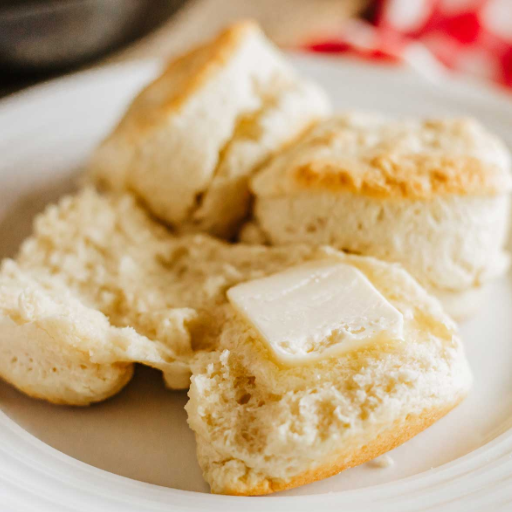
You have found the correct recipe which produces fluffy biscuits...
Read More


The comfort and the taste of the homemade biscuits are beyond comparison, especially if the recipe is simply two ingredients—flour and water. Regardless of your baking skills or the fact that you are very tight on time, this easygoing method is the greatest to prepare hot and delicious biscuits without the need for many ingredients. These biscuits are perfect for an unexpected breakfast, a snack or even as a side dish to a main course, they simply show that with only a few ingredients one can have the pleasure of pure, homemade and healthy goodness. The making of these surprisingly good biscuits will be shared in this guide, together with the human sharing of tips to ensure that they turn out perfect every time. A recipe is both easy and tasty waiting to thrill your taste buds!
Understanding the Biscuit Basics

Key Ingredients for Homemade Biscuits
Just a few key ingredients are needed to prepare sumptuous and delicate homemade biscuits, and most of them might already be in your pantry. To begin with, all-purpose flour is the main ingredient and it is the one that gives the biscuit its structure. Always sift the flour; this will yield a dough that is lighter and more uniform in texture. If you are looking for ways to make your biscuits rise higher, a self-rising flour with baking powder blended in can also be used as a substitute.
The next point in your list is a source of fat, which should usually be unsalted butter or shortening. The butter gives a strong taste and the biscuits are more exquisite with butter, while shortening, on the contrary, renders the biscuits with a very slightly crispy texture. Nevertheless, no matter what fat you are using, it must be very cold, so that the biscuit-making process creates the famous flaky layers by the heat in the baking stage.
In addition, a leavening agent such as baking powder or baking soda which is also one of the essential ingredients to make the biscuits light and consequently have a soft center can be used easily with little hassle. The last ingredient needed for the recipe is either milk or buttermilk, with the former providing moisture and the latter providing moisture plus acidity which also adds a bit of tang that enhances taste. Salt is commonly considered to be a last-minute seasoning that elevates the whole dish’s taste, it intensifies the flavor and at the same time causes a balanced mixture of flavors. Therefore, if you remember the basic ingredients, you will almost effortlessly get very hard and tasty biscuits.
Flour Types: Self-Rising and All-Purpose
The two main types of flour that are generally considered the most common ones are self-rising and all-purpose flour, the difference between the two being mainly in the way of their preparation and envisaged use. Self-rising flour contains baking powder and salt as well as the usual flour ingredients, thus making it an ideal ingredient for leavening in recipes such as biscuits, pancakes, and quick loaves. Meanwhile, all-purpose flour is a choice that is the third in line after none with no extra ingredients, allowing the control in more than one way over how the leavening agents such as baking powder, baking soda, or yeast can be used in recipes.
If you are looking for simplicity along with quick preparation, then self-rising flour will save you a lot of time and effort. However, it is very important to know that self-rising flour after all is flour that has baking powder and salt in specified amounts as an integral part of the recipe which might not actually be suitable for all the recipes. Sometimes heavy leavened baked goods will be the result of mistakenly adding more rising agents than required, thus causing the baked goods to be too dense or to collapse.
Due to its neutral character, all-purpose flour is the first choice when it comes to recipes where custom or exact control over the ingredients is needed. Its versatility in baking means that it is an indispensable item in every kitchen. You can trade one cup of self-rising flour for one cup of all-purpose flour and add 1 1/2 teaspoons of baking powder and 1/4 teaspoon of salt to taste the same result. Such flexibility allows you to tailor the recipe to your specific needs while maintaining consistency across different dishes.
Alternatives to Traditional Ingredients
When you are considering a dish, it is highly essential to choose non-traditional ingredients along with the traditional ones that will not only be compatible with dietary preferences or restrictions but, at the same time, will maintain the quality and texture of the dish. An excellent example of this is wheat flour, which can be replaced with almond, coconut, or oat flour in recipes where gluten is not permitted. These flours have different effects on the end product, for example, almond flour makes the final product heavier while coconut flour imparts a more chewy texture.
In addition, not only sugar can be replaced with honey or maple syrup, or stevia. Every alternative possesses distinct flavor and sweetness level; thus, customization can be done as per customer’s preference. Among others, honey and maple syrup are the best in terms of moisture retention in baked goods; meanwhile, stevia is a nice choice for a no-calorie alternative that does not change the texture too much.
For dairy alternatives, plant-based products are the main option milks such as almond, coconut or oat milk are the alternatives to cow’s milk. Likewise, margarine or coconut oil can be used as a substitute for butter. These products are especially helpful for the vegetarians and people with lactose intolerance since these dairy alternatives make the meal accessible to all without compromising the taste and quality.
Step-by-Step Guide to Making Biscuits
Preparing Your Ingredients
Start with collecting the ingredients needed for the biscuit making process initially. The ingredients that are normally suggested are flour, baking powder, salt, butter, and milk. Each of the ingredients must be weighed or measured with great precision in order to get the proper texture and flavor. For the sake of uniformity, measuring cups and spoons should be used for this purpose and the dry ingredients should be sifted to remove lumps.
Butter should be made very cold and cut into tiny cubes. Cold butter is the secret to getting biscuits that are flaky and layered. A pastry cutter, fork or even fingers can be used to mix butter with dry ingredients up to a stage where the mixture looks like very coarse crumbs.
The final step in this process involves liquids like milk or dairy substitutes, preparing them, and keep them cold. By gradually mixing these liquid ingredients into the dry mixture while gently stirring, you will obtain the dough. If you over mix, it will lead to hard biscuits, so the dough has to be treated as minimally as possible for light and fluffy ones. Your ingredients are ready, and now the stages of shaping and baking are ahead of you.
Mixing the Dough
The dough being the mix, the next thing is to prepare it for baking. The first thing to do is to put flour on the surface of your work so that the dough will not get stuck and make it more difficult to work. Then put the dough on top and either pat it down or roll it out with a very light hand to the thickness that you want, about ½ to ¾ inch is the norm for biscuit thickness. Do not overdo the dough working as such will produce a heavy and not a light and flaky end product.
Then cut out your shapes with a biscuit cutter coated in flour or the rim of a glass. Just push straight down and don’t twist since that would seal the edges and the biscuits would not rise properly. In case you have some scraps left, just combine them gently into one mass and then cut out more biscuits but be careful not to work the dough too much.
When your biscuits are shaped, transfer them to a baking sheet lined with parchment paper or lightly greased surface, leaving them apart for crisp edges or placing them closer together for soft sides. You can brush the tops now with melted butter or milk which gives a golden colour after baking. From now on it’s just time for baking and enjoying the fruits of your meticulous preparation.
Baking Your Biscuits to Perfection
If you want to bake your biscuits flawlessly, then the first step is to set the oven to the temperature mentioned in your recipe, which is usually between 425°F and 450°F. The thermal conditioning of the oven to the exact degree is very vital in the biscuit making process because high temperature maintains the biscuit rising and creates the flakiness of the outside along with the softness of the inside while at the same time coloring the biscuit nicely to brown and crisp outside. The baking tray should be placed on the oven’s center shelf for the best heat circulation.
In most cases, the time for baking is set to 10-15 minutes, yet it might vary depending on the size and thickness of the cookies. It is essential to monitor their progress closely during the entire baking process so that they are not overcooked. One indicator of your cookies being baked is the tops having a nice golden-brown color and the edges being a little crunchy. Another way to tell if they are done is to stick a toothpick or knife in the middle of a cookie and if it comes out clean then they are ready. Just make sure that you do not open the oven door too frequently as this would cause the temperature to drop and thus the cookie would not rise properly.
After the baking process, the next step is to take the biscuits out of the oven and place them on the baking sheet for a minute or two before moving them to the cooling rack. The cooling time maybe a tad short, but it still plays a role in strengthening the biscuits and keeping them warm at the same time. For the best texture and flavor, serve your biscuits hot from the oven with your favorite toppings like butter, jam, etc. If there are any biscuits left, just put them in an airtight container, and they will still be soft and flavorful the next day.
Troubleshooting Common Biscuit Problems
Why Are My Biscuits Too Hard?
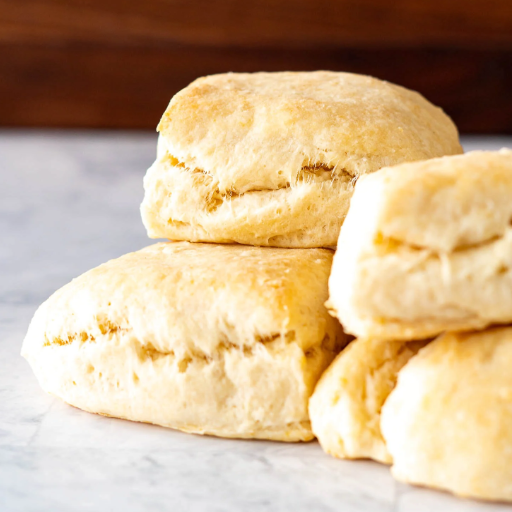
There are numerous possible factors that can lead to hard biscuits; the most frequent is the dough being overworked. When the mixing is too much, the gluten in the flour becomes very active and consequently produces a thick and rough pastry. Thus, the mixing has to be done just until the ingredients are almost united. The dough must not be handled harshly since it will lose its light and airy quality.
Another cause of hard biscuits is the use of either too little fat or wrong mixing of the dough. During baking, fats like butter or shortening generate steam bubbles and that is one of the factors which make the biscuit flaky. The fat should be very cold and should be mixed perfectly with the flour, yet do not mix too much as this will influence the texture you want. Moreover, be careful when measuring the ingredients and make sure you have got the right amount of fat to flour ratio.
Baking the biscuits too long or at an incorrect temperature can also contribute to the toughness. Check that the oven is correctly calibrated and follow the recipe closely for baking time and temperature. Biscuits should have a crunchy exterior and be soft in the interior. To make sure that the baking conditions are right and to prevent overbaking, an oven thermometer can be used. If you attend to these matters, you will get soft, tender, and perfectly flaky biscuits with every batch.
Fixing Flat Biscuits: What Went Wrong?
The first thing to do if you want biscuits that are perfect is to preheat the oven to the temperature recommended in the recipe, which is usually between 425°F and 450°F. The oven’s temperature setting must be very precise for the biscuit-making process because the heat not only keeps the biscuit’s height but also puffs it up and makes the outside hard and the inside soft by cooking it simultaneously to a nice brown and crispy outside. The baking tray needs to be placed on the center shelf of the oven for the heat to be circulated well.
Usually, baking time is 10 to 15 minutes, but it can vary with the size and thickness of the cookies. Therefore, it is very essential to monitor their condition very closely during the baking period so that they do not get burnt. One indicator that your cookies are finished is when the top has changed to a beautiful golden-brown color and the sides are slightly crisp which is also a good sign. Another technique is to push a toothpick or knife into a cookie’s core, and if it comes out clean, the cookies are ready. Just be cautious about not opening the oven door very often because this will cause a drop in temperature and as a result, the cookies will not rise the way they should.
When the baking process is completed, the next step is taking biscuits out of the oven and keeping them on the baking sheet for one to two minutes before moving them to the rack for cooling. The cooling period may be slightly short, however, it still plays a part in the biscuits’ toughness and at the same time, their warmth. For the best texture and taste, biscuits are to be eaten hot from the oven with butter, or jam or any other toppings that you love. In the event that some biscuits are left, simply store them in an airtight container and they will be soft and delicious the next day.
Guaranteeing a Fluffy Texture
- ● Use Cold Ingredients: If you want your biscuits to be soft and light, the very first thing to do is, to use cold ingredients. Cold butter or fat is a need, as it gives off steam that makes the layers in the dough light and airy when baking. The mixing in of chilled liquids like buttermilk or cream can help maintain the dough temperature low and thus avoid the melting of butter at the right time.
- ● Minimal Handling: Do very little kneading of the dough and try not to overmix it. Overmixing would trigger gluten development and you would get tough biscuits instead of light and fluffy ones which is what you want. Use a very light touch when mixing the ingredients and when shaping the dough and stop as soon as everything has been mixed.
- ● Proper Oven Temperature: Finally, the oven temperature should be preheated to the right level before baking. In a properly heated oven, the biscuits can puff up fast without losing moisture. To find out your oven’s temperature, use an oven thermometer because even small differences can have an impact on the texture of your biscuits. Along with these techniques, you will always get a consistent and delightful fluffy outcome.
Creative Variations for Your Biscuit Recipe

Adding Flavor with Vanilla or Cheese
Vanilla, for example, is an option in the biscuit recipe, and its addition will impart to the pastry a soft and gentle sweetness plus warmth, thus making the biscuit a fine choice for breakfast or a nice snack. Prepping vanilla biscuits calls for one to two teaspoons of vanilla extract being added to the wet ingredients prior to the mixing, and this goes along with a bit of sugar or honey to further uplift the taste without overpowering the buttery essence of the biscuits.
Cheese, on the contrary, is associated with its strong and full-bodied flavor which is perfect for lunch or dinner, and thus the savory twist of its addition to your biscuit recipe. The mixing of grated cheese like cheddar, parmesan, or gouda can be done at the end of the mixing process. For simple recipes, half a cup of cheese would be ideal, and you can always adjust the amount up or down according to your taste. The cheese should be divided well so that there are flavor explosions in every bite.
Whether it is vanilla or cheese, the key element is to maintain the equilibrium so that the added flavor elevates rather than overtakes the final product. Experiment with different quantities and combos to create biscuits with a personal touch that is suitable for any event.
Sweetening Up: Using Honey or Sugar
Sugar and honey are two sweeteners that can be used interchangeably, depending on the flavor and texture desired. While honey provides a natural sweet taste along with a light floral or earthy flavor to the cookies, the capability of honey to retain moisture also leads to soft and tender cakes. On the contrary, only sugar is sweet and also gives crispness, especially at the edges of the biscuits.
When using honey instead of sugar, it is necessary to bear in mind that honey is both sweeter and thicker. Typically, sugar can be substituted with honey in equal quantities, yet it is advisable to cut down on the liquid in your recipe just a little to maintain the consistency. Furthermore, honey’s high fructose content might lead to your cookies getting darker faster, therefore, it is always a good practice to lower the baking temperature slightly to avoid over-browning.
Sugar, which is granulated, brown or powdered, is the most common sweetener for biscuits and it has the benefit of letting you change the texture with different sugars. For instance, brown sugar not only retains moisture but also imparts a subtle flavor of molasses, while powdered sugar produces a very fine crumb. In the end, it all boils down to the personal choice and the type of biscuit you want to bake between honey and sugar, thus do not be afraid to experiment with them and discover the best combination for your recipes.
Incorporating Herbs and Spices
Baking’s main ingredients are herbs and spices, which not only the make aroma pleasant but also the biscuits’ flavor, thus making them unique and unforgettable. The most common spices of all time, namely—cinnamon, nutmeg, and ginger—being the primary source of sweetness and warmth, especially in sweet biscuits. In contrast, biscuits with herbs such as rosemary and thyme can be savory due to the use of fresh or dried herbs, which provide a nice and subtle taste that is close to the soil.
It is suggested that to apply herbs and spices one should measure their power against the other materials. As an example, very finely grounded spices like cinnamon merge with the dough to such an extent that the flavor is completely evenly distributed. On the other hand, fresh herbs need to be shredded into extremely small pieces so they will not make a few bites taste stronger while their flavors will be able to mingle during baking. A check of the dough can be done before baking, and the seasoning can be changed to achieve the desired balancing.
Experimentation is the main technique when it comes to the introduction of herbs and spices into the baking scene. It is advisable to use just very small amounts of these ingredients, particularly if you are not sure about the strength of the specific herb or spice, and to gradually increase until you find your personal taste. Moreover, combining spices, for example, cardamom with cloves, or mixing herbs such as parsley and chives, can lead to complex and appealing flavor combinations in your biscuits.
Conclusion: Enjoying Your Homemade Biscuits

Serving Suggestions and Pairings
Just as with store-bought ones, homemade biscuits can be used in different ways during meals which makes them a very adaptable food. The classic way of having biscuits is to add butter, jam, or honey making it a very simple yet pleasing treat. The mixtures of spreads enhance the biscuits’ texture and flavor but not take over their subtle taste. To go with the savory choices, just put a blob of cream cheese on top or have the biscuit accompanied by a bowl of soup or stew thus making a warm and hearty meal.
Moreover, biscuits can be used as the base for gourmet dishes. For breakfast or brunch, warm biscuit may receive a topping of scrambled eggs, crispy bacon, or grilled vegetables. Biscuits and gravy is another combo that brings the rich and creamy flavors right to the mouth. This combo is really common in traditional or Southern-inspired plates where it plays a role in the creation of the hearty and pleasure-filled experience.
A nice way to have your serving ideas finished is to pair biscuits with contrasting textures and flavors. Fresh fruit like sliced strawberry or a handful of blueberries beside is s good way to add a refreshing touch to the richness of the baked biscuits. Homemade biscuits are still a versatile and delightful part of sweet or savory, with accompaniments or simply on their own serving at any occasion.
Storage Tips for Leftover Biscuits
To ensure leftover biscuits are still fresh and tasty, proper storage methods are a necessity. First of all, the biscuits should be cooled down all the way to room temperature. When you wrap biscuits while they are still warm, it causes moisture that will, in turn, make the biscuits soggy. After they cool down, place them into either an airtight container or a resealable plastic bag to keep them from getting dry or losing moisture as it happens during air exposure.
If you are planning to eat biscuits within a very short period, the easiest and best method to keep them is to store them at room temperature where they will remain fresh for not more than two days. If going to be spiced up with your favorite tea orcoffee in two days, do the storage in a dry, cool place that is darkened. Between the layers of biscuits, you can put the parchment paper to prevent them from sticking together.
In case you desire to have delectable biscuits for a long period of time, then freezing is a convenient option you can resort to. The right procedure involves taking them into a freezer container or bag and putting parchment paper in between layers if necessary. The uppermost freezing time limit for biscuits is three months. When you are ready to indulge in them, either allow the biscuits to thaw at room temperature or put them in the oven at low temperature for a few minutes to regain crispness. The correct storage technique will keep your biscuits delicious for days or even weeks later.
Final Thoughts on Your Baking Journey
Baking can be a very delightful and inspiring process which quite literally brings together science and art. Regardless of the level of your skills, the each and every recipe is a chance to experiment, and to get new baking skills for your proficiency. Chef’s mastery and practice are almost like a duet that gives you not only the power of baking but also the delight of creating something so delicious completely from scratch.
One of the key factors to success in baking is the knowledge of the ingredients used as well as the functions they serve. The four basic ingredients – flour, sugar, butter, and eggs – each add different qualities to the mixture concerning texture and flavor. If you are very precise with your measurements, temperatures, and mixing then you can definitely achieve the same outcome every time. You can always give yourself the liberty of making little modifications in the way of doing things so as to personalize your recipes and make them more to your taste.
At last, it is very crucial for you to be patient and to remember this during your baking journey. Mistakes are the best instructors which show you the way and even the most skilled bakers sometimes have trouble. Rejoice in your victories, make the most out of your hard-won know-how, and take delight in the whole process. Baking is not only about the final product but also about creating memories. So, keep experimenting and happy baking!
Frequently Asked Questions (FAQ)
Q: Is it possible to create biscuits using just flour and water — how to create biscuits with only flour and water?
A: Yes, it is possible to create a very basic and easy biscuit dough with only flour and water but it will be a heavy drop biscuit or flatbread instead of the light soft biscuit you might have expected; in case you want to have the light and fluffy biscuit, then it is advised to add 1 tsp baking powder or use self-rising flour or make self-rising flour by mixing all-purpose flour, baking powder, and salt.
Q: If I have only flour and water, what is the easiest biscuit method?
A: When there are only flour and water in your kitchen, the easiest method for making biscuits or drop biscuits is just mixing flour and water with a ratio of water cup to flour; then mix the two ingredients until the dough just about forms then scoop the dough onto a floured surface or baking sheet, and bake – this 2-ingredient method is super easy and maybe will not give the same fluffiness as buttermilk biscuits unless you add baking powder or use self-rising flour.
Q: What is the way to make the dough without milk or butter for fluffy biscuits?
A: If you are looking for a non-dairy option for making biscuits then the best choice is self-rising flour or adding a tsp of baking powder to the all-purpose flour, mixing the flour and the leavening agent then adding the cold water, and folding the dough very gently – do not overwork the dough as you want your biscuits to be soft and not hard.
Q: Will I be able to cut biscuits from flour-and-water dough and then use a round biscuit cutter?
A: Absolutely, it is an option to roll out the biscuit dough with a rolling pin and afterward cut the biscuits using a round or square cutter; just be careful to put every single biscuit on the baking tray with a lot of space in between them so that if butter is used later, it will melt in the oven.
Q: How can I improve the texture of my biscuits — should I use a pastry blender or cut the butter into the flour?
A: In the process of getting quality texture, it would be better to use a pastry blender or cutter to incorporate the butter into the flour gradually and pausing to mix every now and then till the mixture gets to the stage of coarse crumbs; but, this technique still requires butter which, if only a little is put into the flour before the water is added, will give a soft and flaky texture that is better than that of plain flour and water dough.
Q: What are the tricks for using a rolling pin and floured surface without the risk of dough being overworked?
A: In order to avoid dough being overworked while rolling it out on a floured surface with a rolling pin, it is advisable to roll fast and light; make the area very slightly floured so that there is no sticking, fold the dough several times to form layers and then roll it out to the required thickness – using a light touch brings about taller, fluffier biscuits and prevents the dough from developing the heavy bread trait.
Q: Can putting basic ingredients like butter or honey butter later make a better biscuit recipe?
A: Definitely—if you can do one of the following: mixing in the butter, spreading melted butter or honey on warm biscuits, then the taste and texture will be simply brilliant; it’s a frequent practice for people to begin with a very basic 2-ingredient or max 3-ingredient recipe and then show off the enhancements by adding things like butter, cream, and self-rising flour or even just a splash of whole milk.
References
Study on flour quality assessment designed to obtain biscuits – Discusses the use of simple flour and water systems in biscuit recipes.
Sensory texture of commercial biscuits as a function of water activity – Explores the role of water activity in biscuit texture and quality.
Biscuits – Examines the characteristics of biscuit flour and its interaction with water.
Leading Gummy Machines Manufacturer in China offering top-quality products


Shanghai Fude Machinery
Shanghai Fude Machinery Manufacturing Co., Ltd is a leading manufacturer of top-notch gummy and cookie making machines with more than 15 years’ experience in the industry. We provide creative equipment that ensures accuracy and speed while sharing intelligence with food producers. Shanghai Fude remains to be one of the most reliable companies for food machinery because of its dedication to perfection.