The combination of rich chocolate and crispy biscuits creates a...
Read More


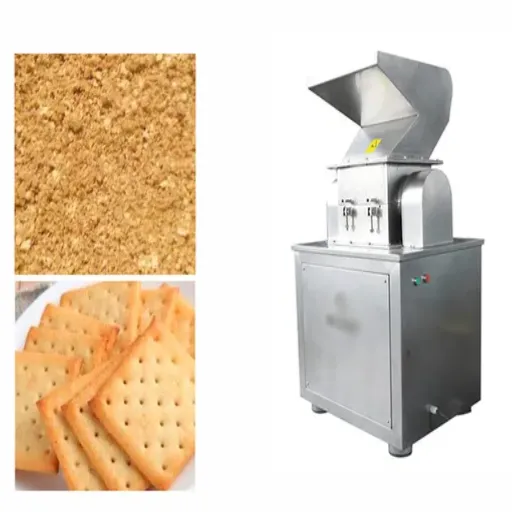
Food production is an ever-scoring field for technological prowess to simplify production and better the quality of foods. The biscuit grinding machine remains one such innovation for a highly versatile operation-that has altered grinding operations for commercial as well as petty bakers. These special-purpose machines offer a level of precision, efficiency, and reliability that manual grinding machines can never achieve. This extensive book on biscuit grinding machines will give you the knowledge about everything, including their basic working and advanced features, so you can make well-informed decisions for your food processing needs.
Introduction to Biscuit Grinder Machines

What is a Biscuit Grinder Machine?
A biscuit grinder machine is a specialized piece of equipment designed to break down biscuits, crackers, and similar baked goods into various particle sizes. These machines utilize rotating blades, hammers, or grinding plates to achieve consistent results across different textures, from coarse crumbs to fine powder.
The main purpose extends hence beyond just size reduction. Modern biscuit grinders maintain the integrity of the ingredients while its uniform particle distribution is a must in product application in commercial terms. The grinding better preserves flavor compounds and nutrients as compared to the conventional manual technique.
The majority of machines for grinding biscuits rely upon rather obvious principles. Firstly, the material enters via a hopper, then it is ground through the material-working mechanism. Finally, it comes out: through screens or through chambers that permit the final particle size of the material. The above-mentioned approach ensures version-less results batch after batch.
The extensive cusp of versatility makes these machines invaluable assets for other industries. Food-makers employ them in preparing bread crumbs, cookie crumbs for dessert bases, and whatever ingredients are needed by any processed food. The scope of uses has indeed significantly increased with the evolution of food processing techniques.
Importance of Biscuit Grinders in Food Processing
Food processing efficiency affects the profitability of a concern and the quality of the product. Some problems that biscuit grinders solve cannot be attended to by an operator. Speed is perhaps the most obvious advantage under consideration: industrial biscuit grinders can handle hundreds of pounds per hour, whereas manual grinding manages only a fraction.Consistency stands as another crucial benefit. Manual grinding produces irregular particle sizes that can affect final product texture and appearance. Machine grinding delivers uniform results that meet strict quality control standards required in commercial food production.
The reduction in labor costs serves as the greatest medium to long-term advantage. In-between grinding operations, one operator can oversee several at once, whereas manual grinding requires one operator to be assigned to each grinding operation. Such efficiencies can then be used by a company to train its human resources in even higher-value tasks. Mechanical grinding also scores high on hygiene, safety, and environmental considerations. Modern machines have stainless steel construction and enclosed processing chambers to diminish the risk of contamination. Most models have designs that are easy to clean and meet food hygiene requirements, making them eligible for use in environments where food is regulated for processing. The scalability factor, on the other hand, must never be discounted. As businesses begin to achieve growth, these biscuit grinder machines can rise to the occasion, handling the scaled production demands without corresponding salaries or working time increases for scalable business growing.”
Overview of Different Types of Grinders
Biscuit grinder machines come in various configurations, each designed for specific applications and production requirements. Understanding these differences helps buyers select equipment that best matches their operational needs.
Hammer Mills represent the most common type for biscuit grinding. These machines use rotating hammers to impact and break down materials against perforated screens. They excel at processing hard biscuits and crackers, producing consistent particle sizes with minimal heat generation that could affect product quality.
The working principle of Disc Mills is that grinding discs with adjustable gaps exist for particle size control. Softer biscuits fit the description quite well, with an excellent final texture. In contrast to hammer mills, grinding produces less dust, thereby making machines a great choice for applications where airborne particles must be less.
Pin Mills have rotating pins that shear between stationary and moving elements, and are known for producing extremely fine powders. They are fine with temperature-sensitive materials and find application in the specialty area requiring the accurate control of particle size.
Roller mills use multiple rollers to crush and grind material between the surfaces. They offer gentle action so as not to spoil the delicate tastes and textures which otherwise can be used for premium biscuit processing applications.
Each type offers distinct advantages depending on the specific requirements of hardness, desired particle size, production volume, and final product characteristics.
Top Features of Modern Biscuit Grinder Machines

Metal Construction for Durability
The key consideration for a high-quality biscuit grinder machine has been stainless steel construction. This, in turn, offers other benefits besides the basic durability. Stainless steel resists corrosion in the presence of moisture and cleaning chemicals to ensure long working life in tough food processing environments.
The non-reactive nature of stainless steel does not affect the flavor, thus preserving the integrity of the product. Food-grade stainless steel meets commercial food processing hygienic standards with smooth surfaces sufficient for cleaning and sanitizing. The guts in heavyweight construction contain reinforcements for the frame, rotors with heavy precision balancing, and bearing systems heavy enough to be subjected to continuous operations. Such features reduce maintenance time and downtime-working hours in a high-production environment.
Many manufacturers now incorporate modular designs that allow component replacement without extensive disassembly. This approach reduces maintenance costs and keeps machines operational during routine servicing.
Coarse and Fine Grinding Options
Another dimension of differentiation is versatility in particle size control. The latest units will have multiple grinding configurations within the same machine so that separate equipment for separate applications is not needed. Interchangeable screens or grinding plates would provide the operator with pretty fast switching between coarse and fine grinding. Generally, screens in the large opening make coarse chunky designs, whereas those with fine mesh return particles as powder-like consistency. This feature allows for various product requirements to be met without any lengthy changes.
Such advanced models offer various speed controls for adjusting the grinding action: Slow speeds yield coarser particles without compromising the texture, while high speeds give fine results. The grinding is carried out generally with all kinds of biscuits endowed with varying degrees of hardness. The progressive grinding systems give ultrafine particles at various stages under temperature control, thus averting overheating that can damage heat-sensitive ingredients along with overriding the flavor of ingredients.
Portable vs. Stationary Models
Depending on operational requirements, space available, and production volumes, one may consider either portable or stationary biscuit grinder machines. Each configuration sells its advantages for different business needs. Portable versions lend a measure of flexibility in small-scale businesses or where the processing area is not adequately big. These generally come with wheeled bases and compact designs for easy relocation from one working area to another. Surprisingly, many portable grinders provide great power and capacity despite the smaller footprint.
Stand alone machines operate at peak efficiency for very high-volume operations. These machines are built with rugged construction and have giant capacity hoppers, coupled with powerful motors to sustain through continuous operations. Being fixed in one place allows integration of conveyor systems and automatic material handling machinery. Mobile, on the other hand, produce best results for custom processing jobs where grinding is performed at distances or within mobile food processing services. The self-contained design offers all components required for independent operation. Modular stationary systems give companies the option to begin with basic modules and add more as the operational needs increase; this yields a scale-up to equipment sales without complete replacement as production has thicker requirements.
Feedback and Reviews from Users

Customer Experiences and Testimonials
All those biscuit grinding scenarios imply multiple real-world applications, furnishing us with additional pertinent information that may not be given in the specs or literature for the system. Small bakeries report that upgrading from manual grinding to machine processing greatly improves production efficiency and consistency in the finished product. On the other hand, commercial bakery operators stress an online importance for reliable customer service and availability of spare parts, so that any breakdown or fault in a never-stopping continuous operation system is responded to immediately and production would not be stopped in a jiffy. Maintenance training by the manufacturer itself and technical support at any time are the topmost praises coming from users.
Food industries are adamant about easy-clean designs that serve to fulfill regulatory requirements. Operations that have to meet strict hygiene regulations prefer machines with fewer crevices, detachable parts, with surfaces that can resist aggressive cleaning chemicals. The cost-conscious buyers always speak of the total cost of ownership that is considered beyond initial purchase price. Therefore, higher upfront costs for machines with cheaper maintenance and longer lifespan of components will provide a better value over the long term. Many users suggest working for more capacity than required so that growth can be fostered. This thinking in advance provides for the elimination of equipment replacement when the operations start to grow.
Common Issues and Solutions
A buyer should understand and familiarise himself with the usual problems in order to make an informed decision and prepare for a successful machine implementation. Motor overheating is among the most common problems due to overfeeding or insufficient ventilation in the vicinity of the equipment. Excess vibration indicates worn-out bearings or unbalanced rotors in most cases. An efficient maintenance schedule incorporating the lubrication of bearings and inspection of rotors will solve almost all vibration problems. Users who perform preventive maintenance on their equipment enjoy the benefits of longer equipment life and fewer unscheduled outages.
Inconsistent particle sizes result most commonly from screens or grinding elements that are worn. Base replacement schedules on processing volume rather than waiting for signs or undetectable wear to prevent quality issues and ensure production consistency. Dust formation can create housekeeping and air quality problems. Depending on the situation, soluble or wet ventilation systems should be set up along with dry dust collection equipment. Most successful operations now invest at least in an integrated dust management system during the initial installation. Cleaning problems arise when the machine design neglects proper design features for food processing environments. Buyers must look for models that offer tool-less disassembly with smooth internal surfaces and drainage systems to prevent water accumulation.
Comparative Analysis of Popular Models
A market research has brought forth very central performance differences existing among biscuit grinder machine manufacturers and models. Typical entry-level units for small operations process 50-200 lbs. per hour. Basic control over particle size ranges through interchangeable screens. Price intermediate machines for a business setup handling 200-500 pounds per hour with variable speed control and dust management apply yet dancing on the delicate hairs of best value proposition for operations to set their minds to expansion. Industrial-grade machines are those that process at 500 pounds per hour with features like industrialized feeding systems, automated sensors for quality control, and even remote monitoring. With bigger costs come more capacities in productivity and less needs in manpower.
Machines designed for specific industries with applications such as allergen-free processing or organic certification are heavyweights. They, however, serve niche markets well. These machines often include features for in-depth cleaning and tracing of materials. European manufacturers usually pride themselves on higher build quality and innovative features; Asian manufacturers emphasize price competitiveness and bare-bones functionality; American manufacturers adopt the middle ground in terms of quality and price but boast strong customer support domestically.
Buying Considerations for Biscuit Grinder Machines

Price Range and Budgeting
Biscuit grinders vary largely in price depending on capacity, features, and quality of construction. To get around a portable home grinder setup, you would have to shell out anywhere from $2,000 to $5,000-the price feasible for tiny bakeries or perhaps startups with thinner budgets and that require only moderate amounts of production. Mid-priced stationary grinders would generally fall in the range of 5,000 to 15,000 dollars and provide greater capacity and features for established works that look to expand. These machines often make a fine selection in terms of performance at a cost that growing businesses can afford.
Industrial-grade systems range somewhere between $15,000 and 50,000-plus, lots of capacity, automation, and other factors playing roles in it. Such buys should be really made only on a high-volume operation, where the productivity gains can give back the capital expenses. Bigger-list machines agro financing for smaller operators through leasing or manufacturer-made programs. It is advised that the total cost of ownership should be worked out to consider maintenance, parts, energy, etc., over the expected life of the equipment. For any buyers that are limited in budget, the used equipment market may be an option, but one is paying in terms of shorter hours of useful life and very limited warranty coverage. Professional inspection comes into play especially for used grinding equipment.
Where to Buy: Online vs. Local Shops
Comparison: Purchasing Options
✓ Online Marketplaces
- • Competitive pricing
- • Extensive product selection
- • Limited technical support
✓ Local Equipment Dealers
- • Installation services
- • Training and support
- • Higher prices
Equipment purchasing decisions involve trade-offs between price, service, and support options. Online marketplaces often offer competitive pricing and extensive product selection but may provide limited technical support and after-sale service.
Local equipment dealers are usually expensive but provide all the essential services of installation, training, and technical support… Established dealers usually maintain relationships with service technicians who know specific equipment models. Manufacturer direct purchases will provide a better price and warranty but may either require large minimum order quantities or local service support. This is an advantageous route for large operations with internal maintenance.
Because of the essential need for dry, careful inspection, equipment auctions and liquidations yield avenues for great reduction in price and warranty protection. In this way, they tend to suit the buyer with some technical expertise and flexible scheduling. Trade shows and industry exhibitions give an opportunity to see the equipment firsthand, speak to the manufacturers directly, and indicate discount prices and efficient opportunities for comparisons across multiple models.
Manufacturer Reputation and Warranty
The reputation of a manufacturer will dictate how dependable the equipment is, issues related to availability of parts, and services. Typically, companies who have stood the test of time for decades will offer better engineering quality coupled with full customer support. Warranty packages tend to vary a lot depending on whom it was bought from. Basic warranties are generally 1 or 2 years, whereas premium ones last over 5 years. Extended warranties often represent real value for very critical production equipment. Part availability becomes an issue as the machine gets older. Long-term support is better enhanced when the manufacturers have big dealer networks and dedicated parts inventories compared to smaller companies with very little resources. Technical support quality varies substantially from one supplier to another. Those who provide 24-hour-a-day support, remote diagnostics, and thorough training programs offer a better customer experience. The financial stability of manufacturers affects long-term parts and service availability. Well-established companies with strong financial positions provide better assurance of continued support over equipment lifetime.
Applications of Biscuit Grinders in Baking and Beyond

Grinding Dough for Cookies and Biscuits
Traditional pistol boning operations used to help in biscuit and cookie production. Bakers usually use these machines to impart a certain crumb structure needed for various products-from pie crusts to cookie bases for ice cream applications. Controlled particle size through the machine grinding allows for uniform moisture absorption and baking characteristics. Slight variations can become very important in large scale production. Various flavors are introduced for specialty purposes: they grind flavored biscuits or cookies with different herbs and spices. These value-added items inevitably bring premium prices, thus sharpening the baker’s competitive edge. Waste reduction is another very important consideration. Waste reduction represents another significant benefit. Broken or slightly imperfect biscuits that cannot be sold whole can be ground into valuable ingredients rather than discarded, improving overall production efficiency and profitability.
Using Grinders in Meat Processing
The versatility of biscuit grinder machines extends beyond baked goods into meat processing applications. Many units adapt easily to grinding breadcrumbs for coating applications, creating consistent textures for breaded products.
Sausage production facilities use these machines to grind bread and grain ingredients that serve as binders and fillers. The controlled particle size ensures even distribution throughout meat mixtures, improving final product texture and yield.
Pet food manufacturing represents a growing application where biscuit grinders process various ingredients including meat meal, grain products, and treats. The ability to achieve specific particle sizes helps meet nutritional requirements and palatability standards.
Seasoning and spice grinding applications benefit from the precise control these machines provide. Many processors appreciate the ability to switch between different materials with thorough cleaning between batches to prevent cross-contamination.
Innovative Uses in Other Food Industries
Creative food processors have discovered numerous applications beyond traditional biscuit grinding. Snack food manufacturers use these machines to create consistent crumb coatings for various products, from nuts to dried fruits.
Nutritional supplement companies utilize biscuit grinders to process protein bars and health cookies into powder form for mixing into drinks and other products. The gentle grinding action preserves nutritional content better than high-impact methods.Restaurant and catering operations find value in creating custom breadcrumb mixtures and specialty ingredients that differentiate their menu offerings. The ability to process small batches economically makes these machines practical for foodservice applications.Confectionery applications include grinding cookies and crackers for incorporation into chocolate bars, ice cream mix-ins, and dessert toppings. The consistent particle size ensures even distribution and appealing final product appearance.
Reference Sources
- 📌 Efficient Biscuit Grinder Machine for Food Processing – Timesautomation
- 📌 How a Biscuit Crusher Machine Enhances Efficiency in Large-Scale Food Production – Sinofude Technology
- 📌 Best Grinder Machine for Biscuit – Alibaba
- 📌 How Does a Biscuit Making Machine Improve the Efficiency of My Bakery – Foods Machine
- 📌 The Benefits of Using a Biscuit Grinder in the Food Industry – Knitcons
Frequently Asked Questions (FAQs)
❓ Description of the Biscuit Grinder Machine
The biscuit grinder is a piece of equipment that is used to grind biscuits and cookies efficiently. It has a sturdy construction, usually metal, so that they sustain the rank of machines that are long-lasting and reliable. Many models are manual, giving the user the choice to grind more or less depending on his needs. The grinding can range from coarse to fine particles to meet the requirements of use for baking or as an ingredient in other recipe. While looking out for a biscuit grinder, it is vital to check the manufacturer’s details to make sure that you have a good one.
💰 What is the Price Range for Biscuit Grinder Machines?
Biscuit grinder machines can vary greatly in price according to features and manufacturer. Entry-level machines could be quite cheap with high-end machines costing even more for added accessories and faster grinding speed. Average retail prices tend to be between $50 and $500 dependent largely on particularities and overall sturdiness of the machine. Comparison shopping especially on shipping costs must be considered before purchasing. Reviews give some insight as to value-for-the-money.
⭐ Top Features to Look for in a Biscuit Grinder
Grinding capacity, speed, safety, and other features rank up there as some of the top qualities and features when looking for a biscuit grinding machine. The ability to grind in many ways-from coarse to thin-is a feature that makes it highly adaptable for various recipes. If a machine has more manual options in the meat mincer grinder, that’s even better. Durability-wise, stainless steel or metals are preferred over plastics. Quality speaks louder-even amongst consumers themselves. Are the reviews favorable?
🛒 How to Buy a Biscuit Grinder Machine?
Check the needs first, e.g. amount-of-biscuits-to-be-ground requirements. Search online for various available models and compare their features and prices. Almost all manufacturers deliver the purchase direct to the customer, helping save time and effort. Also, try local shops where the prices can be more competitive; also try to see the machine in person. JBLivers-Warren-2009 guarantees good-so-an-occasional-interest may arise-the- warranty and good feedback.`
🔧 Is a Manual Biscuit Grinder Machine Effective?
The biscuit grinder manual machines may prove effective for anyone who likes working with traditional techniques. These machines offer more control over the grinding process, allowing one to maintain a certain texture. Putting more effort into manual grinding, they remain tough and generally less expensive compared to their electric counterparts. Many users appreciate the didactic function of the grinder when working with smaller biscuit-or cookie-almost recipe-induction. Lastly, manual grinders are also usually simple to clean and maintain.
✅ What are the Benefits of Using a Biscuit Grinder Machine?
Enhancing baking efficiency and consistency in biscuit making is among the advantages of using a biscuit grinder. Ground biscuits-giving either fine or coarse particles-matter much to the texture of your recipe, delivering one of a kind flavor profiles. The biscuit grinder machine will be of great help to you in terms of time versus manual grinding methods, especially for bulk grinding. Secondly, most biscuit grinder machines can be utilized to grind other ingredients like nuts and spices. From this point, it is worthy to say that a quality grinder will come handy in your baking-related work.




Shanghai Fude Machinery
Shanghai Fude Machinery Manufacturing Co., Ltd is a leading manufacturer of top-notch gummy and cookie making machines with more than 15 years’ experience in the industry. We provide creative equipment that ensures accuracy and speed while sharing intelligence with food producers. Shanghai Fude remains to be one of the most reliable companies for food machinery because of its dedication to perfection.